Politics in the Referendum

It’s inevitable that politics would get mixed up in the Australian public’s decision whether to include the First Nations people in our Constitution.

I’m writing this blog post only a month after the other Voice-related one, because I want to respond to John Howard’s comments in The Australian newspaper on 26th July 2023.

I have a huge respect for John Howard, Australia’s Liberal Prime Minister 1996-2007. So, I take his comments seriously. I’m glad I was able to vote for him. I’m glad that, as a woman, I am allowed to vote at all. Just as I’m sure indigenous Australians are glad that their inclusion in the Constitution in 1967 – as Australians – has allowed them a vote.

John Howard is quoted in the article as saying: “Shouldn’t we just be sitting down talking to each other? Not about the voice, not about reparations, not about treaties, but just talking about how to lift up Aboriginal people, and put them in the mainstream of the community, finding out ways of doing it.”

Well, yes! That would be terrific. Talking about lifting the Aboriginal people up and including them in the mainstream is a great idea. And that would best be done with a group of Elders who have the most understanding of the issues. And for continuity, since governments come and go, the group should be a separate body assured of its place in Parliament.

Mr Howard is concerned that the Voice to Parliament will create conflict about how to help indigenous people. That’s possibly true because there will always be differing opinions (and we can’t stop media hype) but the point is for the body to provide advice based on close knowledge and understanding of the issues. So, therefore, there is a possibility that the advice will reduce conflict.

We would also be hopeful that good advice aligned with the specific issues would reduce money wasted on schemes that don’t help.

I believe it’s best to leave out of this discussion any future treaty and reparations. These bigger issues complicate the proposal at hand. They are distracting, more contentious and would take a long time to work out. Therefore, the Albanese government not talking about them makes sense. Mr Howard’s suggestion that there’s subterfuge in the exclusion, to me isn’t warranted. Although both sides of government do like to play that game.

Finally, there is the issue of inclusivity of Aboriginal people into the mainstream. Mr Howard says: “We are profoundly and absolutely part of Western civilisation. Part of our culture is the Aboriginal culture, but the mainstream culture of Australia is not very Aboriginal.”

I agree with him that the best solution is to encourage all Australians to be in this mainstream, to “remain one people, living in one nation under one law which applies with equal force to all of us.”

But that does not negate my belief that privileged white people and indigenous Australians, because of their life experience, think differently and need different things. Having a Voice to Parliament will provide Aboriginal people with a closer and clearer expression of themselves.

As a reminder, all we are being asked is: do we agree to the addition of the following?

Paraphrasing, the added lines are that a body called the Aboriginal and Torres Strait Islander Voice can make representations to the Parliament and the Executive Government of the Commonwealth (the High Court) on matters relating to themselves. The Parliament will have the power to make laws in relation to the body’s recommendations.

Whatever politics you follow, find out as much as you can from as many places and people that you can. If there are Aboriginal people you can talk to, ask them what they think. If we believe we should be one Australia, put the political arguments aside as much as possible. Sometimes in the end, when we’ve done all we can with our minds, we have to make a choice from the heart.

Useful links:

Constitution Alteration (Aboriginal and Torres Strait Islander Voice) 2023 – Parliament of Australia (aph.gov.au)

Constitution alteration – Parliament of Australia (aph.gov.au)
Constitutional reform: FAQs – Benefits of reforming the Constitution | Australian Human Rights Commission

Between Draft Blues

In the last six weeks I have written nothing to do with my novel. I’m in Pause mode, in the space between drafts. It feels like limbo, like I’m adrift at sea in a dinghy, unsure that I’ll ever make it back to the main boat to which I’m usually tethered. I’ve been patiently waiting on an author-connection to assess, edit and hand back my manuscript.

An established author who is willing to wade through the muck that is a first-time writer’s work, who is willing to pay attention and use her authorly skills to give advice that will better that work, is, in my view, a fairy godmother. My expectation was that copious amounts of magical instruction would be sprinkled over me like fairy dust, acting like a salve that had the power to transform and transfigure my rather voluminous housedress of a fifth draft into a silken, fitted ballgown. With sparkly glass slippers.

Unfortunately, the wonderful author is human, and this is real life and stuff happened that has prevented her from wading through that muck.

And so, I’m drifting. Directionless. How will I fill in time while I wait for another generous, willing author, to make her way through my storyland, planting seeds and slashing weeds along the way?

The first thing I need to do is relax. Many authors advise to take time off between drafts. At least a month, say some. I’ll come back to it refreshed and see it through a new lens, right? But what if I forget what I was trying to say? What if my characters forget to inform me?

I need to distract myself and focus on all the things I think of doing while I’m trying to write. There are a million things I could do varying from reading to exercising, short courses to socialising, redecorating to cleaning grout. Procrastination comes so easily when the manuscript needs work, so why not now? After utilising the initial month’s break for a two week adventure-holiday, catching up with long lost friends, and listening to writerly podcasts – all very satisfying – I’ve found the extra time has not been so productive.

Perhaps then, I need to revert to a schedule. Get up early, do something writing-related for an hour and a half, like I’m used to (I’ve just enrolled in two online writing courses!), read, exercise, listen to podcasts, research something of interest… Am I mad? What human that lives by a schedule doesn’t crave a holiday from a schedule?

I guess the problem is, I just want to get back to writing my book. I miss it, miss my characters, and miss the progress now that completion is finally in sight. It’s been a long journey. I’m in my sixth year of writing. It’s been hard with lots of heartache and angst and deprivation. But it’s looking like a half decent story worthy of the three women characters who are so brave and loving and formidable.

Waiting has always been hard. Patience needs to be practised.

I know I won’t forget the book’s message and my characters are way too keen to have their journey to let me forget anything they need to do. So, I’ll take a deep breath, step back, and let my sub-conscious and the Universe do what they do best: test me, teach me and make magic.

At least I’ve got time to get back to writing my blog.

Australia’s Referendum on the Voice to Parliament

Later this year, all Australians are being asked to vote ‘yes’ or ‘no’ to a simple question that will add a few lines to our Constitution.

The question on the ballot paper will be:

“A Proposed Law: to alter the Constitution to recognise the First Peoples of Australia by establishing an Aboriginal and Torres Strait Islander Voice.

Do you approve this proposed alteration?”

When I first heard this proposal I had a bunch of questions: What does that even mean? Why is it necessary? Is it important to me? Doesn’t ‘special treatment’ add fuel to the Us and Them issue?

I admit my own ignorance and lack of enthusiasm when it comes to much politically associated news. I had heard snippets from the ‘Yes’ camp and the ‘No’. It seemed to me that even the First Peoples of Australia weren’t sure about it. I didn’t pay too much attention. Until now.

Much of what I have heard has been negative. The ‘No’ camp seems far more vocal. The media, which thrives on drama and bad news, and is not above misleading the public, is relishing the negative. I have discovered that there are many layers to the ‘No’ and all of them seem to be political and power oriented.

But this is not a political issue!

This is a Constitution issue. That is, it is an issue of the Australian public.

So, firstly: What is the Constitution?

The Constitution is a founding document (one of the most important steps in the process of Federation) that began on 1 January 1901 that sets out how Australia is governed. It overrides any other laws and can’t be changed by the Parliament of the day. The Constitution can only be changed through a vote by the people.

Interestingly, although it was put together by the six colonies and voted on by the people, not all people could vote. Most women and Indigenous Australians were not allowed to.

So, what are the proposed few lines? You can find them here: The Voice http://www.voice.gov.au

Briefly, the added lines are that a body called the Aboriginal and Torres Strait Islander Voice can make representations to the Parliament and the Executive Government of the Commonwealth (the High Court) on matters relating to themselves. The Parliament will have the power to make laws in relation to the body’s recommendations.

The body would be chosen by the Aboriginal and TSI communities and Elders.

Why have I become so interested in this and why has it become important? Because my instincts tell me that there is a scare campaign out there. I’m reminded of other minority groups seeking acceptance, and the fight of women for equality.

My gut says, of course there should be Aboriginal and TSI people representing themselves on matters that affect them, that if the Constitution was being written today, they would have a seat at the table and be contributing with their specific concerns in mind.

My conscience reminds me that I’m an educated white person born in this country, and therefore I have a privileged position. My own path has been easy. I don’t feel guilty about that, but I am aware that most, if not all, indigenous people have a much more difficult path. Their history, upbringing, health, isolation and education have all severely impacted their opportunities. In my position, I can barely imagine what their lives are like.

Many governments have tried to address these difficulties, and some have been reasonably successful. But each government prioritises differently, and programmes start and stop as parties come and go. There is instability and the programmes themselves are not necessarily designed by people who fully understand their suitability. Billions of dollars and many years have been wasted because Aboriginal and TSI people have not had input.

This is why the body, the Voice, needs to be made up of the Aboriginal and TSI people themselves. Their chosen representatives will understand their culture and the issues in their communities. It is why the body needs to be embedded within the Constitution.

The Voice is an advisory body, only. The intention is to direct government spending to achieve better outcomes. The Parliament will still have the power to take the advice or not.

The scare campaign reeks of politics; the ‘my policy is different from your policy’ and political party games undermine the simplicity and importance of the proposal.

Julian Leeser, an expert in Indigenous affairs who was the opposition’s Indigenous Australians spokesman until he resigned in order to campaign for the Yes vote, says:

‘The Voice will work on making remote communities safer, work to get children to school and keep them there, work to address the terrible infant mortality and renal failure in indigenous communities, and it will work to create local jobs and industry so we can break a culture of welfare dependency.

The Voice is not about two classes of Australians. It’s about eliminating the differences in economic and social outcomes that separate Indigenous Australians with other Australians.’

This sums up all the questions I had. I have also listened to discussions on whether the Voice goes far enough (in my opinion, it does) and whether treaties should come first (in my opinion, it would be a very long wait) but all that is too much to go into here.

I believe that giving Aboriginal and Torres Strait Islanders this recognition and chance to speak for themselves is fair and will ultimately make Australia even more democratic. I believe ‘Yes’ is the right choice.

Note: There are many good places to seek honest information. Be careful when reading from the media as there have been misrepresentations and lies.

https://voice.gov.au/

‘The Voice to Parliament: All the Detail You Need’ by Thomas Mayo and Kerry O’Brien. Recording of the interview at the Sydney Writers’ Festival https://omny.fm/shows/sydney-writers-festival/the-voice-to-parliament-all-the-detail-you-need

Tools to have conversations: https://yes23.com.au/

An Emerging Writer’s Spiel

When it comes up in conversation that I’m writing a novel, I’m usually asked what my book is about. I’ve always struggled with the answer to this, not because I don’t know what I’m writing but because I never know whether to tell the story or whether to reveal what it’s really about, it’s message.

If I was asked by a prospective publisher, I’d want to give my twenty second pitch. But even that befuddles me. There’s the advice that as an emerging (unpublished) author, a hook – something vibrant and catchy – is required. But that’s so subjective I can’t formulate one.

My genre is fairly clear, at least. It’s contemporary – probably women’s – fiction. But if a publisher put literary in that description, I’d be thrilled. Literary fiction is what I like to read. It’s what I admire.

So I’ve created an answer that merges story with message and I hope it sounds intriguing.

It’s about three friends who are dealing with the challenges common to women in middle life. It’s about their experience of love and loss, family and friendship, and the choices they make to rewrite future chapters of their lives. It’s set in Australia, India, and Ireland over the course of a year.

This draft will be finished by June – I’m going for positivity – and then I’ll have another look at that pitch and send off my manuscript to the highly selective world of agents and publishers. I’ll finally walk the talk and show all my commitment and perseverance.

If anyone has any advice for me, please post it here. Likewise, if you like my spiel, encourage me with a thumbs up.

Happy reading, dreaming, and writing, my word-loving friends.

The Funeral

I have just been to a funeral of a man I barely knew. Strange, you might think. But not so strange since we were neighbours.

I knew his wife better than I knew him. His wife, who is now without a husband. A woman who had been married for forty years, who didn’t expect to be a widow so early, if at all. You see, her husband was only sixty-five.

She knew the boy at school, the fifteen-year-old, I found out at the funeral. They weren’t ‘an item’ until they were twenty-five, she said. He was her ‘soul mate,’ her best friend, the father of their four children, and the Nonno to their six grandchildren. Sadly, the unborn seventh, will have missed meeting this grandfather.

I saw a lot of love at the funeral. I saw it in those downturned mouths, those tears of grown men, those stooped shoulders. I could hear it in the broken voices, the sniffs, the silences. I listened to the stories told by brothers and sisters, daughters and sons, the mother-in-law, the bereaved widow, and I could feel the respect. Words like ‘legend’ and ‘unique’ were used. Nicknames like ‘Dancing Dennis,’ and ‘The Don’ were bandied about. He sounded like a character, a fun guy, a stirrer, an accepting and encouraging father, a handyman, a genuinely good guy.

I wish I’d known him better.

He was diagnosed with a nasty cancer less than a year ago. The last two weeks were bad. He insisted on coming home for Christmas, to ‘the best palliative care he could get.’ He shared Christmas Day with all his family. And then he went to bed and left.

There is no doubt in my mind that this man left then because it was kinder to his family. Only today I found out that his family was the most important thing in the world to him, that he was selfless, that he would do anything for them.

Observing the large family today, I believe it.

His wife, in closing, said, ‘Life will go on, as it must. But it will never be the same.’

People like this man make the world a better place. He was here, he did his best, he left a legacy. He left good people in his wake. People who will also go on to live good lives, inspired to do their best, and make their own way.

Last week, this man had two requests: I want bright colours at my funeral. I want people to be happy for the good life I had. What a great attitude.

I went to the funeral out of respect for the grieving wife. As a neighbour. As a member of the community. As a potential friend. At funerals, we hear people’s stories. We get to know people better – the deceased and those who loved them. By knowing some of his story, I now know some of hers. Perhaps in this way I can help. It might be that chat while holding the hose on the garden. Or that drink on the veranda at sundown. It might simply be the knowledge that a neighbour cares.

By going to the funeral, I have reached out a hand. By doing so, my own life has more meaning.

Who doesn’t like Christmas?

Trigger Warning:

Hands up – Who doesn’t like Christmas? Since I’ve been stating I’m not a fan, I’ve been surprised by how many people don’t. I think it’s nonsensical, annoying and stressful.

Those of you who enjoy the razzle dazzle of it, I’m happy for you. Some of my best friends love the decorations and lights and present giving. And I appreciate that. I also appreciate a good fruit pudding with custard and brandy butter. I understand those who enjoy the religious experience. After all, Christmas is supposed to celebrate the miraculous birth of Jesus, isn’t it? And hymns sung in a cathedral do sound divine.

I even accept that Christmas in the northern hemisphere – an experience of snow, open fires, mulled wine and reindeers – is a wondrous affair that is totally different from the southern hemisphere. There, the traditions fit. Icicles sparkle and Santas looks snug. The roasting of a turkey doesn’t dehydrate the cook. In Australia, it’s hot and no one wants to be in a kitchen with the oven on. But still some insist, choosing tradition over comfort, foreign white bird over the best local seafood. Our Santas probably take a week to recover from all that sweat amongst the fake snow.

Speaking of fake snow, Christmas decorations do nothing for me. I appreciate that some people like to decorate their homes and good on them for the creative effort. But for me, a tidy person who likes her décor the way it is, decorations look messy, and the time involved in setting them up and taking them down would be better spent at the beach or in a book. I also object to using our precious earth’s resources for making short-life, tinselly frou-frou that ends up as rubbish. I wish more of those creative decorators would make their own ornaments using natural materials.

As a non-Christian (and a non-believer in Saint Nick), I see Christmas as a marketing exercise and a sham. I don’t agree with Christmas hype and dislike buying gifts simply because it’s expected. I’ll happily give a warranted and wanted gift at a time when it’s most useful or on someone’s birthday, but I see no logical reason for delaying the gift for Christmas or giving a token gift on that day.

But even more than those things, it’s the pressure of Christmas that I find offensive.

Families often find themselves stretched and stressed simply because of the focus on having everyone together on one or two days. Christmas Eve and Christmas Day are like flames in a dark night, attracting every living moth from miles around. Why make our family members, especially our young people, juggle and choose and cram in visits to different but equally important parts of the family, all on one particular day? It doesn’t make sense and often results in multiple Christmas celebrations that are tokenistic or fraught with tension, or someone gets left out. If the focus on the day was removed, families could spread out and spend leisurely time together without the drama. Also without the exorbitant prices.

If I had my way, the Christmas season would simply be a festive season where families aimed to get together to celebrate life, be grateful for each other, share their love, on any day that suited them. Christians could still celebrate Jesus’s birthday and children could still be told stories about Santa. Gifts would be irrelevant, and the materialistic slant would disappear. So would the pressure and the fake snow.

We could do away with the nonsensical, annoying and stressful, and instead, experience peace, joy and goodwill. We could focus on being inclusive, kind, and generous. We could relax with family and be charitable to those without one. We could be creative, reinvent Santa and make all of us saints.

Pushing Through: Writing Past Insanity

I don’t often write about writing but since I’ve been finding it challenging lately, I thought I could share with you why sometimes I think persevering with the writing of my novel is insanity, and why I persevere, anyway.

Firstly, for context, this is my fourth year of writing. I call the draft I’m working on Draft Four because I’ve started again four times. The beginning and end have never changed. The themes and characters haven’t either. The changes happen in the guts of the story and the quality of the writing.

The moments when I question my sanity come when I’m struggling with a scene; it’s the difficulty in creating a story that is right for the character, right now.

The thing is, there has to be a point to the scene. It has to have enough nutritional value for the character to grow or change in some way. There has to be a reason for the chicken to cross the road, and it’s not just to get to the other side. It’s what is going on in the chicken’s head or heart that the reader needs to understand.

And then, the series of scenes need to progress in such a way that the reader wants to go further with the chicken because they can sense that the chicken has great potential and will one day be the mother of all chickens.

The problem comes when the difficulty causes so much struggle that it provokes the fight, flight or freeze response. I glue myself to the desk and write anything because I won’t let it beat me and Liz Gilbert has drummed into my head that perseverance is the way. Or I find an urgent task to do, like rearrange the shoe cupboard, or go to Bunnings for, well, anything. Or I lie on the floor because suddenly, my body is so tired, and I think, how did I come to be doing this?

But then I remember why I’m doing it. It’s because I have a message and my characters are living and standing on the side lines, never leaving me, wanting me to write them in so they can convey it.

And also, because I’ve come so far. Let me explain.

I have spent so long on it that I couldn’t bear to have wasted my time. And I wouldn’t like to be judged a bailer, or worse, a failure. Especially by myself.

I have become a better writer. At first, I was a beginner. Learning a new skill takes time and practise, and with every draft, I’ve given my writing plenty of both. The expression and style have improved as my skill grows. Which reassures me even now, as I struggle, because I know I’m still learning, and I will still improve.

Rewardingly, as a person I have grown. Becoming skilful in something creates confidence. Persevering at something that’s difficult improves resilience. Writing a believable story requires understanding of human nature and the world we live in. I am becoming wise. I am transforming along with my characters. We’re in this together. I can hear them cheering.

Finally, the moments of struggle pass and the words flow. I feel sane and deliriously happy at the same time. Perseverance pays. I will do whatever it takes to cross the line. And whenever I can, I will stop to admire the scene. Eventually, this novel will be done.

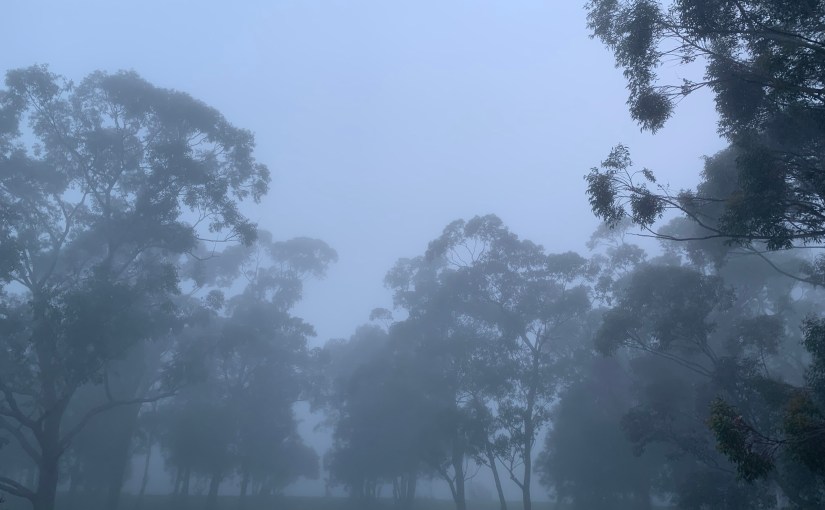
PS: To any struggling writers (or creatives) out there – You’re not alone and it’s worth pushing through. Imagine the struggle to be fog. When the fog passes, it will be a brilliant day.

Get into the Flow

I’m possibly late to the party but recently I’ve been hearing a lot about the alpha state, that state we’re in when we’re relaxed, zoned out of the world, and focused on a thought or task in a calm, effortless way.

We’re in the alpha state when our brain waves are in the middle range of the brainwave spectrum. We’re idling, calm, and receptive to new ideas. Our ability to absorb new information is enhanced in this state and we can be more creative.

If being productive is the goal, we want to be in the alpha state.

When we’re not stressed, when we’re not distracted by our senses (how we feel and what’s going on around us), and when our minds are not busy juggling multiple tasks, we’re most creative, most efficient, and most productive.

How do we get into this state? Mostly, by actively relaxing, however you like to do that; by deep breathing, meditating, practising mindfulness, yoga, aerobics. Swimming laps if that’s your thing. Bush walking on my own works for me.

The reason I’ve become aware and interested in the alpha state is because I want to work better. I want to be creative and productive in an efficient way. That is, I want ideas and many words on the page in as little time as possible. I want the words to flow.

Which leads me to the second term I’ve been hearing a lot about: The Flow State.

The Flow State is when we lose track of time because we’re in a calm, creative state of concentration. We’re fully engaged with our subject matter, yet completely happy and relaxed.

I have trouble getting into this state, but when I’m there I can write pages without any trouble. The words tumble out instead of being picked precisely and painstakingly. I’m always ecstatic when I’m done with it and the feeling lingers.

So, obviously, this is desirable.

There’s plenty of information available on ways of entering flow state but I think these must vary greatly between people and types of tasks or goals.

For me, slightly different processes work at different times of day. But to tap into that alpha state I personally require routine, tidiness, and tea.

The following is a helpful group of actions to take to get us in the right frame of mind: *

  • Create a mental cue so that the brain will remember it’s work time every time you do it: repeat a mantra, play particular music, or perform a ritual.
  • Eliminate all distractions: have a clear desk, turn off the phone or put it in work focus mode, use headphones if there’s noise around.
  • Utilise biological peak times and have proper breaks: first thing in the morning and early evening are reliably good times for me.
  • Choose instrumental music that is familiar and repetitive to run in the background: I highly recommend Indian traditional bansuri music.
  • Have a cup of tea or coffee to wake you up a bit.
  • Stay hydrated. The brain is 75% water and needs a constant supply to function at optimum level.
  • Do one task at a time: focus on a single task, returning to the task every time a stray thought enters. Increase the focus time as you get better at it.

In general, the alpha state seems like a pretty good place to be, especially if you have work to do. I know I perform best when I’ve done the urgent tasks, when I’ve created a nice space around me, when I’m rested and feeling good about myself. Add tea and I’m well on the way to achieving flow state. My intention is to make the above list a good habit.

When are you most likely to get into flow state? How do you feel when you do?

*Ref: https://www.atlassian.com/blog/productivity/alpha-brain-waves-are-associated-with-a-flow-state-of-mind-heres-how-to-ride-yours

Historical reference: original researcher psychologist Mihaly Csikszentmihalyi https://www.ted.com/talks/mihaly_csikszentmihalyi_flow_the_secret_to_happiness

https://www.sciencealert.com/the-science-of-why-flow-states-feel-so-good-according-to-a-cognitive-scientist

Respect

Respect has been on my mind a lot lately.

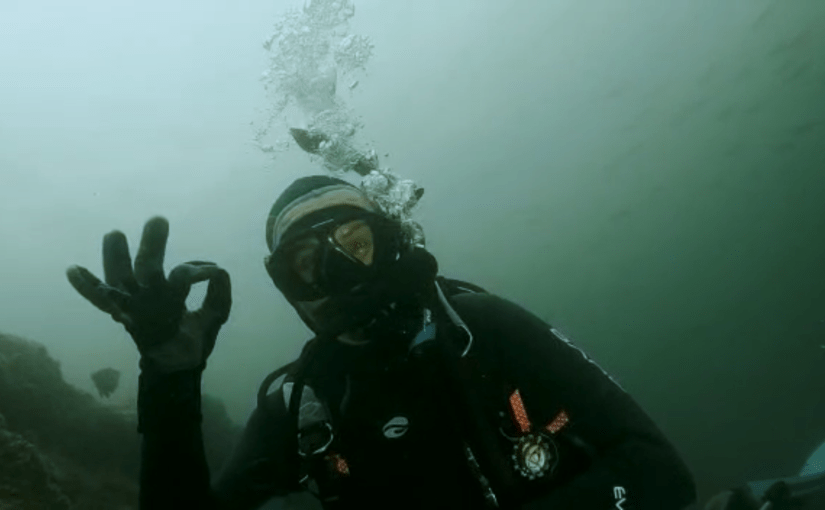
On a personal level, I’ve had cause to respect the efforts of someone close to me, their reaching out with an olive branch, offering peace and a positive future. Also personal, I’ve been scuba diving again, something I do to enhance my self-respect (through effort, learning and courage) and appreciation of the natural world. The reward on a recent trip was to be surrounded by inquisitive and playful seals and inspected by grey nurse sharks, both creatures I have utter respect for and who seemed to respect me.

On a broader level, I have felt respect for the forces of nature, the altruistic actions of those who help despite cost to themselves, those who take a stand when rights are threatened, and for a leader on the opposite side of the world who has remained strong and calm and forceful despite the horrors of war.

So, what is respect?

For the purpose of this blog post, the relevant meaning is a sense of the worth of something: a person, a living thing, a place, an institution, a culture, an inanimate thing.

It is due regard for people’s feelings, wishes, or rights.

It is a recognition of value in someone or something and a demonstration of that.

Of foremost importance is respect for ourselves. We need to care for our own wellbeing, value our own worth, and appreciate our own thoughts and inclinations before expecting respect from others. How can we expect others to value us if we don’t value ourselves? How would we know when we were being disrespected? How would we even know what to respect in others if we didn’t understand and value our own minds, if we didn’t respect our own actions?

Having self-respect guides our morals and gives us strength, enabling us to respect others thoughtfully. Equally, it enables us to remove ourselves when there is no respect coming our way.

Respect is a primary foundation for our physical and mental health, the health of our relationships, and the health of our planet. Without respect, people become destroyers of themselves, others, their relationships, and the environment.

It is good practice to show respect first, to assume other people and places are worthy, and of value. Doing no harm, being polite, actively listening, and being helpful are all good ways to show respect.

I believe respect is imperative in any loving relationship. Feeling and showing respect for a partner, a friend, a child or parent, and requiring respect in return, makes for a healthy relationship.

Once respect is lost in a relationship, unless it can be rebuilt, it is doomed. If someone’s attitudes or actions cause us to think they are unworthy of our regard, the relationship is no longer viable.

I believe respect for the natural world is imperative in saving the planet. Our lack of regard for it has damaged it severely. Learning about it, treating it as important, understanding how we fit within it, immersing ourselves in it, getting our feet wet and our hands dirty, and therefore discovering its worth, is the only way to salvage it.

Finally, showing respect for things we don’t fully understand, for the differences between people, cultures and attitudes, for each other as a general rule and not just on special days, will surely help us get along better, repair what we have broken, and enhance our enjoyment of the world.

I’d like to suggest we keep RESPECT forefront of our minds.

How would that feel for you?

‘Respect yourself enough to walk away from anything that no longer serves you, grows you or makes you happy.’ Robert Tew (American writer)

‘There is no respect for others without humility in one’s self.’ Henri Frederic Amiel (Swiss writer and philosopher)

‘If you have some respect for people as they are, you can be more effective in helping them to become better than they are.’ John W. Gardner (American novelist and poet)

‘You can easily judge the character of a man by how he treats those who can do nothing for him.’ Johann Wolfgang von Goethe (German writer, scientist and statesman)

The Pain That Makes Life Pleasurable

I’ve always got a bit of a buzz from doing things that scare me or initially seem too hard. So, when I heard a podcast the other day on the ABC’s All in the Mind on The Pleasure of Pain, I listened with fascination.

Apparently, an element of pain or suffering can give us pleasure through contrast: relief after a horror story, bliss after an ice-cold swim, relaxation after a workout, a happy denouement to a sad movie.

But what I found even more interesting, was that the degree of difficulty, struggle, and effort that went into your pursuit – not too hard, not too easy, but just challenging enough (the sweet spot) – affects how much we enjoy something and how much we value it.

This is true from doing a puzzle, to learning a skill, to playing a sport, to raising kids, to doing our life’s work.

So, it’s not just contrast but a feeling of mastery and control that are key. It feels good to put yourself in a bad or difficult situation knowing that you can take it, knowing that it’s under your control, knowing that you can or are doing well in it.

It’s the incremental progress, the struggle, the journey, that makes life enjoyable and interesting.

For me, personally, this explains a lot.

I like the thrill of a scary movie, or a roller coaster ride, or white-water rafting, or being on a glass walkway, or being in nature in the dark. These are small thrills, fears I conquer easily, but nonetheless, that give me pleasure.

Upping the ante, I have, in the past, liked to challenge myself to jump off rocks into the sea, a pursuit I find terrifying but compelling (only if my kids did it first). It was the sense of victory after overcoming the angst, that made it fun.

Currently, I’m in the midst of two pursuits that are scary, challenging, and involve plenty of pain.

I’m writing a book, which is a painful, difficult, tedious, time-consuming, and challenging process. It’s a high-end struggle that is totally self-inflicted. I get up every morning to an alarm and start the day with writing (and a cuppa to make it easier to do). I put the hours in, tear my hair out and question my sanity. But then it flows. It works. And I’ve written something I’m proud of. And it is so worth it, so satisfying, so valuable, that I strive to do it again. I’m climbing the mountain, a day at a time, and the peak is getting nearer. I know I’ve got this. I know what my purpose is. And the journey is worth it.

I’ve also taken up scuba diving again. I did it a dozen times when I was young, when I had friends who did it, when my husband was my buddy. But there was a long hiatus. Taking it up again on my own, when I’m so much older, has been somewhat stressful. So why did I do it? Apart from the obvious – it’s underwater hiking and I’m a sucker for nature – I think it was because of the challenge, the test of my courage. It’s horribly uncomfortable (all that heavy, bulky gear), makes you look terrible (bad hair, no makeup, googly eyes), and there’s a lot to learn. But the achievement is in staying strong enough, having an attitude of WTF, and knowing how to master all that gear and not die under water. I’m fully responsible for myself, something I’ve struggled with all my life. I am learning to be independent and have faith in my mastery of a skill. I’m losing the fear and it’s exhilarating.

I would highly recommend pushing yourself past your comfort zone and experiencing a bit of pain and suffering, whatever that looks like for you. It will give you a buzz like no other and make your life richer and more meaningful.

Life offers plenty of mountains to climb and we can all climb them our own way.

How will you choose to suffer for pleasure, today? 😉

PS. Remember that it is choice, that it is our own direction, that makes any suffering pleasurable.

https://www.abc.net.au/radionational/programs/allinthemind/the-pleasure-of-pain-v2/13777806