Despite Intentions

I’ll be brief. Time is of the essence. There is too little of it and so much to do. I just remembered; I have a book to write.

Of course I’m being facetious. Of course I never forgot I have a book to write. But sometimes it looks that way. Despite the great intentions I publicly expressed last month, I have not focussed especially well, nor have I made much headway.

There is so much to do! In the writing of the book and also in every other crevice and crater of life. Life is full of these drifts and deviations and distractions. The internet is not the only thing full of rabbit holes.

Is everyone else experiencing this phenomenon, that of making thoroughly good intentions and then letting them dribble away, as if they were unimportant? It doesn’t make sense. We know what we need to do. We know what’s good for us. Why then is it so difficult? What makes us procrastinate, be lazy, make the decision not to follow through?

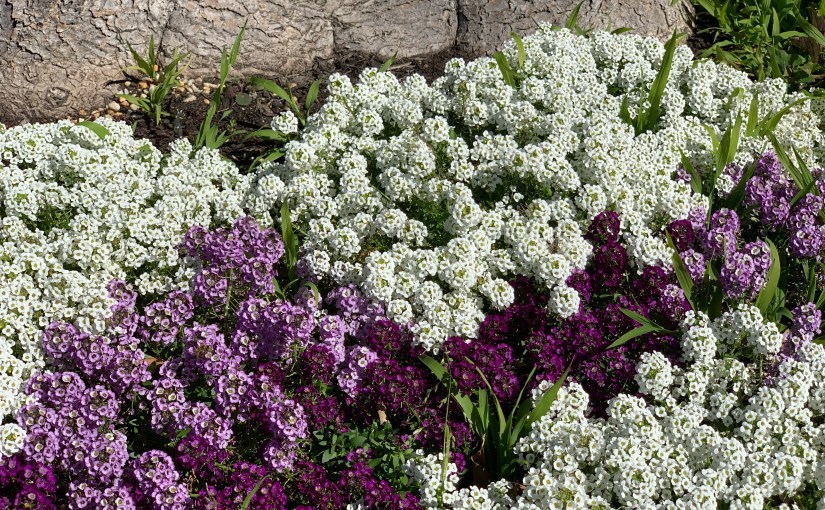
The first strides towards my goal were enthusiastic and vigorous. I made good progress. I had a vision and drove myself towards it. But then, it got hard. Hard is the problem. Hard is uncomfortable. Hard is like a great big boulder on the path with seemingly unclimbable sides and no visible way around. Just looking at it makes us stuff up. It makes us notice the flowers on the side of the path, the pretty things within our reach.

The solution is easy. Be aware of the flowers but see them for what they are; distractions that lead us up other garden paths. Ignore them and get back to find a way over, around or through that boulder. Stick to the task at hand.

Persevere. I’ve written about that before too.

Someone once said that a ‘professional writer is an amateur who didn’t quit.’ I’ve had that in my mind for a long time. It applies to all pursuits and has in the past kept me going. It will now, too.

Maybe the strides need to be baby steps. As long as they’re in the right direction, it doesn’t matter.

Ali Lowe, one of the brilliant women in my writing group and the first to be published, advises, ‘write to the end.’ That’s how she did it. And may other authors as well. It relates to writing but also to achieving any goal. Stick to the task, right to the end.

An inspiring thought. A good intention.

It’s time to get back on track. And keep coming back.

I’ll get there. I’ve got this.

As Liz Gilbert would say, Onward.

Focus. Right to the end. Be present. Do it with intention. Re-commit to what is important to you. Achieve whatever it is you’ve selected to be your goal.

I thoroughly recommend the newly launched The Trivia Night by Ali Lowe.

Disclaimer: I can’t guarantee that you’ll only be able to read this in your breaks. It may prove to be a clump of flowers too irresistible not to steer you from your path.
Time to Begin Again

And now it’s time to begin again.

New year. New resolutions. Fresh start.

Or are you beginning again for a different reason? A door closing. A course, run. A stage completed.

To begin again, to make a fresh start, we need intention. We need to acknowledge, accept, and move on. We need to shed our ways, preconceptions, and habits. And try something new.

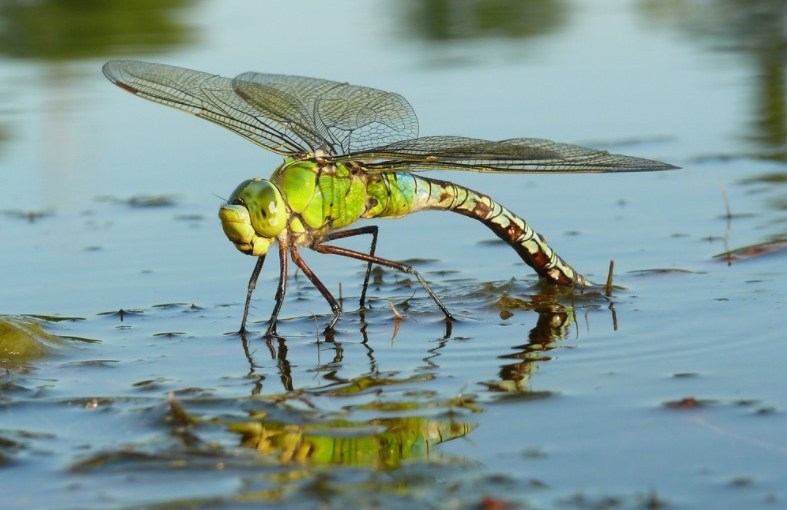
Like a dragonfly crawling out of the pond, struggling out of its larval skin, and taking flight.

My fresh start is a combination of new year objectives and new stage-of-life possibilities.

On New Year’s Morning, I decided that presence, friendship, and focus would be my intentions for the year.

I need to be more present. I am too often planning and arranging, projecting myself into the future. That’s my nature and my habit, but by acknowledging that I lack presence, I can reign in the plans and sit for a while, linger, be more in the moment more often.

The moment, after all, is the life we are living.

Friendship has always been a priority of mine and I believe I am a good friend: someone who makes the effort, who can be relied on, trusted. But friendship’s importance has been magnified since becoming single, since my children have become adults, since becoming a writer, since social distancing and lockdowns. Friendship has become sacred. I intend to pray at its alter with even more vigour.

Friendship is in its essence, love, and is vital to thriving.

The third objective is to focus on writing my book – homing in on the message, conveying the point, getting it done. I aim to get it right and submit to a publisher later in the year. This year, I have a good chance of doing that. I have completed a challenging stage of my life; I have experienced a marriage breakdown, a move, a death, and a renovation.

Now I can move onto a new stage with a mind free to focus on something that is of utmost importance to me.

In the last few days of January 2022, I can honestly say I’m ready to begin again. Now it is time. Now, is a great time.

Whatever your stage of life, whatever your circumstances, each year can be treated as a fresh start. So can each day. So can each stage.

How are you starting 2022? With intent and resolutions? Or with tying off loose ends? Are you ready to shed your skin and begin again?

Picture courtesy of http://www.kidsdiscover.com

Trainer, Mentor, Tribe: Helping Us Achieve Our Goals

Trainers, mentors and tribes are terrific tools in helping us achieve goals.

These days, these three are found across many fields of interest and disciplines, from the sports world to the creative or corporate worlds, to simply, the local community.

Personal trainers in exercise have become hugely popular amongst fitness-oriented, ordinary people, because they work. Find a good one, that is, one who’s qualified, has good interpersonal skills and who we can connect with, and we’re far more likely to be consistent in training and reach our goal, whether that be short term, I want to lose belly fat, or long term, I want to be fit and toned. Their involvement increases the intensity and quality of our efforts and therefore, the results. And they make it more fun. The number of times I’ve laughed during a workout is countless – I think good PTs dream up some exercises to challenge our brains as much as our bodies.

Mentors have been around since humans first talked. A mentor is a guide, a teacher, a guru. A good mentor is someone who is more experienced in our area of study, career, spiritual practice, or hobby than us, and helps us improve in that area by giving advice based on their understanding of our personal, individual challenges. Once again, if we find a mentor we connect with, they’ll be able to see our needs more objectively, point us in the right direction, and keep us on task. They can help us learn and help us achieve.

My last blog post described my writing style and the angst I suffer because of it. I expressed my fear that novel writing might not be for me, considering how long it takes me to write. At the end, I decided I needed to do something different – after all, if you repeat the same action and expect a different result, then you must be crazy, right? So, I took a step back, away from the computer, and returned to basics. I used coloured cardboard, index cards and felt pens, and had some fun. I played with my characters and their stories and analysed what I had. I found a clear message, the truth, the essence of my novel. And on the computer, a lot of words – 176,000! The story ran like a film in my head but was still not expressed in all those words. So, it finally dawned on me. I need help. I need a mentor. The moment I engaged one, I felt lighter, less fatigued, and my enthusiasm soared. I feel like I’m going to succeed.

The final tool in the shed of helpful resources is the tribe. When we find one, we’re never alone, we’re supported, and we feel part of something bigger than ourselves. When we’re connected to others through values, interests and sensibilities, our minds and hearts are nourished. We’re also encouraged in our personal pursuits.

My writing tribe frequently makes my day brighter. They’re there to share all things writerly – serious or funny – and also to support one another; in times of need (writer misery) and times of success (writer bliss). Thanks to The Twinklings 😉.

My other tribe is my community. Talking about big and small issues together (over afternoon tea), being active together (in walking shoes or kayaks), and pulling together to achieve a common goal, or just help someone out, makes each of us feel integrated and important. Being a part of community, amongst like-minded people, a tribe, gives me a sense of value, of enhanced self-worth. Anyone who feels like that, will be far more likely to achieve their goals. They’re also good enough to share my blog. Thanks to Sussex Inlet Pals😊.

I hope that anyone trying to achieve a goal, succeed in an undertaking, or fulfill a dream, would consider getting themselves a trainer or mentor or joining a community to find a tribe. You’ll reach your goal faster and have more fun along the way. I’m so glad I did. Will you?

Writing Isn’t Easy – This Writer’s Struggle

I am the world’s slowest writer. I believe that no other writer could possibly struggle as I do, choosing each word as if it were an artisan chocolate, arranging words as though they were precious stones in a glorious Bulgari necklace, sequencing sentences like layers of finely ground nuts, cream and sponge cake in an Austrian torte.

If the results of my efforts were as impressive as any of these, I wouldn’t mind. But they’re not. They might be, one day, but I’m still learning, refining my skills, being the apprentice.

With the amount of experience I have, I should be writing like a landscaper makes a garden, planning, digging, shovelling up words as if they were pebbles and laying them down into paths. It’s much easier to fill a garden with beautiful plants once the structure is there.

This would be the logical and rational approach, even the more creative one. But I’m stuck in a rut. Called perfectionism. Sometimes the struggle to be perfect is so overwhelming that I want to walk away. I wonder if this novel-writing gig is really for me.

But then, I want to tell the story. I’m compelled. I don’t seem to have a choice.

I write this blog between scenes of my novel. It’s a way to communicate, give me a break and actually publish a piece of work. Once a month I get that little buzz of satisfaction that I have produced something. It reminds me that I have something to say. Something I believe in. Something worthwhile.

The idea for this post came to me as I struggled with a difficult scene, one in which extracting the idea was like sorting through a rubbish dump. I had rewritten the first few paragraphs several times, rearranging the words and the sentences. Literally moving things around to find the essence. The needle in the haystack. The point of writing anything. When the writing is challenging like that, distractions creep in. Anything, everything else, seems more interesting, more manageable, more urgent. Even other writing.

I complain about my writing style and yet I continue it. I battle myself, sometimes, to change my ways. Occasionally, creativity flows. But then I see a flaw. And I attempt to fix it. And I’m back where I began. At the end of the day, it’s only perseverance, sheer determination and self-discipline that will prevail. And a belief that my story has value. And needs to be told. And eventually, it will be close enough to perfect.

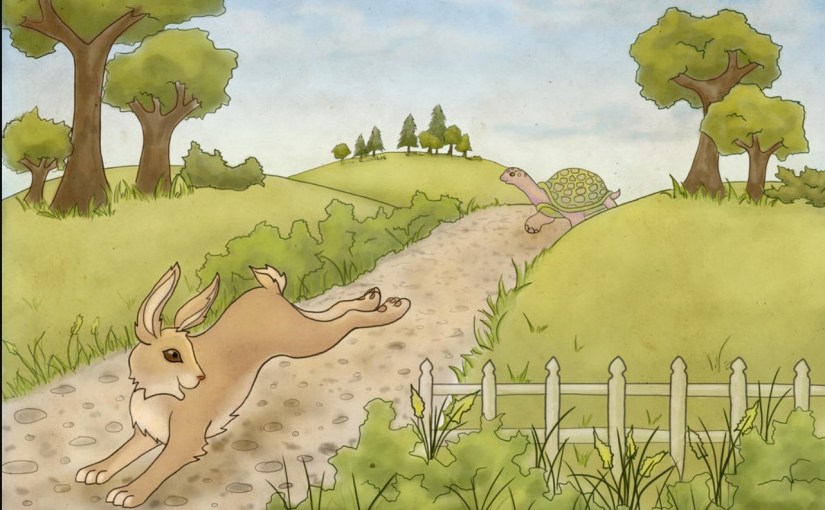
I reassure myself that it’s not only the hare that can cross the finish line. So can the tortoise.

Credit: Artwork of The Tortoise and the Hare by C A Harland

Worry is Wasteful

Worry is a waste of time since it achieves nothing.

It is a waste of energy since it produces nothing.

It is a waste of possibility since it fills our minds with doubt and fear, leaving no room to dream.

It eats away at our strength and leaves us weak.

Worry takes what is good in life and hides it!

We all worry to some degree at some point in our lives. It is a human trait. We have imaginations and our minds wander, dwelling in the past where we consider our mistakes and experiences, or rambling forward to what might happen in the future. We deliberate over choices, imagining the consequences of taking path a or b, on repeat.

The dictionary definition of worry is to torment oneself with disturbing thoughts; to feel anxious or troubled about actual or potential problems.

We don’t learn anything from worry. It is not helpful in resolving problems as it only hinders rational thought and logic.

Recently, someone close to me said I seemed ‘to be worrying a lot.’ Considering what I think about worry, I was dismayed. At first, I laughed it off and defensively replied that I was getting old, as if this would excuse me.

I don’t even think old people worry more than the young. They just worry about different things.

But then I considered the statement. Was I worrying a lot? I do seem to be worrying about the future of the world and what condition it is going to be in for my, as yet unmade, grandchildren. I do worry about the effects of Covid-19 and the people of war-torn countries. I believe many people share these thoughts and that they are reasonable. The key is not to dwell on them. And I don’t believe I do.

I recognise these thoughts are not useful. They limit my ability to be present and enjoy the now. And so, I’ll move on.

The exercise taught me something. It revealed the difference between worry and concern.

What my friend perceived as worry was, on reflection, concern. I was concerned about her well-being. And that is a good thing. Concern shows that we care. It is a positive thought process since it leads to something that is actionable. If she was not okay, then perhaps I could do something to help.

It also revealed that I am prone to the same mistake. I react badly when I think someone is worried about me. It gives me a feeling of inadequacy, like they don’t think I can manage. It is disempowering. But I now see that I too may be perceiving concern and care as worry. I will now look at it differently.

We would all benefit from being more aware of our thoughts and asking ourselves if they are beneficial. If we recognise that they are not, we have the power to change them. If we ask ourselves, is there anything I can do about this? and the answer is no, go outside and smell the fresh air, listen to the birds, feel the breeze, contemplate the flowers. If the answer is yes, then do it.

And see where that takes you.

**********

Helpful Quotes by Others:

Worry often gives a small thing a big shadow. Swedish Proverb.

Worrying does not empty tomorrow of its troubles. It empties today of its strength.

Stop worrying about the potholes in the road and celebrate the journey. Barbara Hoffman.

Worry does nothing but steal your joy and keep you very busy doing nothing. Healthyplace.com

Worry pretends to be necessary but serves no useful purpose. Eckhart Tolle.

Most of the things we worry about, never happen.

Writer’s Block in Lockdown

There are so many thoughts going around in my head, I can’t think of what to write. Perhaps it’s because I feel there is no way out.

Sydney in lockdown. An oxymoron. I am free but I am not.

It is a privilege to live in Sydney, a safe city where people move around without fear or restraint, a city where business thrives and social gatherings swell. Until now.

Now, suburbs have borders, workers and businesses are in crisis. There is financial distress and emotional distress. Society is contained within one’s own home, non-existent outside.

I miss sharing a meal with my family. I miss dropping in on a neighbour. I miss going to the movies. And I feel unusually lonely. I feel trapped as if I am caught in a cage.

I am one of the lucky ones. I, at least, have a meal. I can meet with a friend to go for a walk. I can move around my 10km circle, and I am not going to lose my home. And yet, I too am suffering. Just by having restricted freedom. I can’t imagine what true loss of freedom might be like and I sympathise with those people whose lockdown is worse. All I can offer you are words. And right now, they are stuck in my head, my own sub-conscious lockdown.

Thoughts need space. They need time. If I choose to stop suffering and instead appreciate how lucky I am, then surely the thoughts will settle, and the words will find their way out.

No matter our lockdown experience, we would all do best by selecting our thoughts. Weed out the damaging ones and feed the healthy ones. Give them space. Give them time. Find things to be grateful for.

Sydney may be in lockdown. But in our minds, we are free.

Today’s lockdown goals: Go for a walk in my suburb and find a blooming wattle tree. Sit with my thoughts and create an abundance of blossoms. Write.

What are yours?

Grieving for India

India.

Bejewelled, glorious, soulful India.

Heart of my heart.

Soul of my soul.

I hear your cry, your prayers, your calls.

No time for cymbals or sandalwood.

Where is the rose water?

Why no pindas, offerings to the gods?

Where is the priest?

Why is there no puja, no ritual, no garland?

Just grief.

Smoke.

The kaws of the crows.

The trees must come down.

There is no more wood to burn.

My heart aches for you India.

Blessed India.

Beleaguered. Bereaved. Bewildered India.

By Carla Simmons.

Life is a Juggling Act

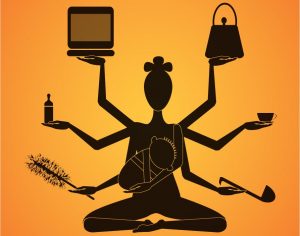
Juggling many balls is the way I run my life. It is often not conducive to a calm state of mind or a good night’s sleep, and I have tried to juggle less to achieve both, but I am an addict for cramming as much in as possible and so I always go back. Lots to do is the stuff of life.

If the world operated according to my plans (that is, my diary schedule), if external events, and people, could be controlled, there would be no problem with this, but as much as I try, the world goes on around me following its own agenda and my control extends no further than myself. In truth, even that is unreliable!

I am writing a book, planning renovations, and trying to stay socialised and healthy.

That’s quite a lot but with proper scheduling, it should be possible. After all, I have all day! It’s just peculiar that all day goes so quickly! And everything takes longer than a day!

Writing a book requires the discipline of sitting on a chair in front of the computer for hours each day, in my case split between morning and evening. Health requires exercise – a trip to the gym, walking 10,000 steps, a swim – which also takes a couple of hours. Social health means lunch with a friend or dinner with the family.

Then there’s self-care, cleanliness, and chores, all consuming more time, repeatedly each day; the background of our lives.

In my case, I am also a sucker for travel. I love to discover new places, have experiences and adventures, on my own or with friends. This is the final ball that can unbalance the flow and set all the balls falling. And yet, it is irresistible to me.

But creating something, having a purpose, doing the things we need to do for an emotionally and physically healthy life, doing things that excite us and challenge us, that fulfill us, and make us joyful, are essential, in my opinion, for a well-balanced and full life.

And if that means, occasionally, that I am juggling too many balls for a calm, Zen state and a good night’s sleep, then I can live with that.

We only get one life. Stuff it full. Push the boundaries. And try not to drop the ball.

Forgiveness: Letting Go

Forgiveness is a gift that we bestow upon ourselves.

This concept, for me, was the first step towards understanding how essential forgiveness is for a happy life.

Originally, I thought forgiveness just meant excusing or pardoning an offender and argued that some acts could be forgiven, and some could not.

I knew that people forgave on grounds of religious beliefs, or compassion, or in order to put some horrible thing behind them without necessarily delving in too deeply.

I knew that self-forgiveness was important in order to accept our own shortcomings and mistakes, to enable us to live without debilitating self-criticism or guilt.

I knew that forgiveness was more effective in rehabilitation than punishment.

None of these ideas were complicated. And none of them went deep enough.

Discussing forgiveness with my friends, I realised there was so much more to it. Opinions and feelings varied, as did the experienced circumstances.

But a common reason for forgiveness amongst those with the most cause to be offended, was to dispel their own pain.

What I had neglected to consider was that other component of forgiveness: ceasing to feel resentment.

Ceasing to feel resentment is a choice made entirely by the person who is hurt and is nothing to do with the perpetrator. Releasing the negative feelings enables us to realise that our minds are not determined by external circumstances, that no matter what anybody does, we are free to choose our emotions.

Consider what it feels like to be resentful; it is unpleasant and makes us sad and angry. Isn’t it better to feel pleasant, peaceful, and calm? Why keep a thought that is hurting us?

Harbouring resentment is detrimental to our lives. It creates emotional conflict and even health issues, affecting our minds and bodies, causing digestive issues, skin conditions, and more. It is like taking poison and hoping that the other person dies.

To forgive does not mean overlooking the offense and pretending it never happened. Forgiveness means releasing our rage and our need to retaliate, no longer dwelling on the offense, the offender, and the suffering, and rising to a higher, more pleasant state. It is an act of letting go so that we ourselves can go on. Sue Monk Kidd.

Forgiveness is not only important for major offences. On a day-to-day level, forgiveness enables us to live a more peaceful and pleasant life. Forgiving road rage, rudeness and lack of consideration, frees us from anger and an agitated state of mind.

Letting go of hurts in a loving relationship, enables us to maintain a peaceful state. Forgiveness opens us up to understanding, and therefore, to loving more deeply. It is the foundation of a deep, meaningful relationship.

Siblings, or children and parents, or best friends, or couples, sometimes don’t speak to each other for years, over some perceived or real offense. They miss out on opportunities to be supported, to be included, to be joyful and to be loved, and often regret it, wondering too late, how they could have been so stubborn.

Other times we might need to say sorry, even if we are not the ones in the wrong. Saying sorry means that we value the person and the relationship more than being right.

A friend, Chris Brown, made a speech at his daughter’s wedding. Tears came to my eyes as I listened. It was one of the most loving, touching pieces of advice I have ever heard:

Think about what is strong in the marriage, not what is wrong.

The first to apologise is the bravest.

The first to forgive is the strongest.

The first to forget is the happiest.

A happy marriage is the union of two good forgivers and forgetters.

There is no healing without forgiveness. We cannot be happy in a resentful state. To have a pleasant life, to be in control of our minds and emotions, to grow spiritually, to be our best selves, we need to forgive.

Forgiveness is a most valuable gift. And each of us has the power to bestow it; to others and to ourselves.

Spiritual teachers all talk about forgiveness. Here are a few worth listening to:

Forgiveness gives us freedom, and freedom is the only condition for happiness.  Thich Nhat Hanh.

Sometimes letting things go is an act of far greater power than defending or hanging on.  Eckhart Tolle.

To forgive is to set a prisoner free and discover that the prisoner was you.             Lewis Smedes.

The weak can never forgive. Forgiveness is the attribute of the strong.             Mahatma Gandhi.

Relationships don’t thrive because the guilty are punished but because the wounded are merciful. Max Lucado.                                     

3 Life Lessons on Forgiveness When Feeling Hurt | Lessons from Bhagavad Gita

Sadhguru – How to Forgive Someone Who Hurt You [ An Insight on Forgiveness ]

The Importance of Forgiveness | Eckhart Teachings

What is God to You?

I don’t believe in a male God who sits on a throne in the kingdom of Heaven, and I don’t like religion other than the stories and the arts.

But that doesn’t mean I don’t believe in the existence of something – the Universe, the Infinite, the Spirit – that is greater than myself; something that is genderless and formless; something that can only be sensed, initially, with silence and stillness, meditation and a certain introspection; what I think of as, Big Energy.

God, to me, is the feeling that something big out there is connected to something small within me.

That small thing is like a black hole. Sometimes I ignore it, and its pull is missed. Life goes on. But there is a feeling of limitation. There is no depth. Other times, I notice it and allow myself to drift towards it, like going with a rip, past the shallows, to the open sea. It gives a sense of expansiveness, of greater possibility, of another dimension, that anything is possible. It is energising.

When I was young, I attended a Church school. I enjoyed the stories and the singing but having atheist parents, did not think too deeply on God. Then in my teenage years, full of angst and romance, hormones and emotion, I found that sitting alone in my local church, I could get relief from inner turmoil. I concentrated my thoughts, felt a connection to God, and poured out all my troubles. I prayed.

My church attendance was brief. At seventeen, I met a young man who answered my prayers. He was strong, smart, and scientific. Another atheist. I needed no other god.

Occasionally throughout my adult life, when I was distressed or conflicted, I would call to the stars on my evening walk, but that was the extent of my spirituality, my connection with any type of god. Until I went to India in 2014.

India buzzes with spirituality. Eighty percent of Indians are Hindu, and they are not quiet about it. Gods and rituals are numerous and noisy, colourful and scented. They cannot be ignored. And in my case, the energy in the air could not be unfelt.

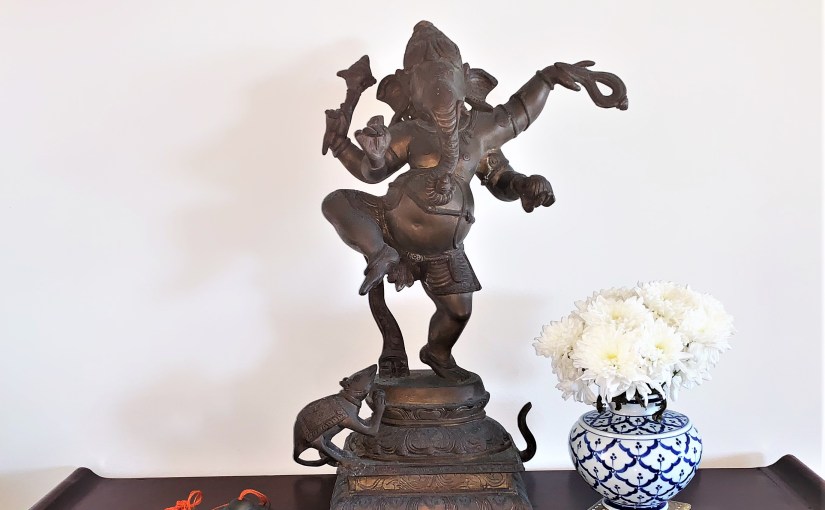
I had been in India only a few days when I walked into a big barn of a store, with my husband, in Kochi, Kerala. The array of gods, statues made from wood, brass and marble, from palm sized to car sized, was seemingly infinite. I wandered around, smiling indulgently, until I found myself standing face to face with a tarnished brass, elephant-headed, four-armed, big-bellied statue of compelling magnetism. His long lashed, elephant eyes engaged me, and I did not move on. The shop keeper came up behind me. Lord Ganesh. Remover of obstacles, he said.

In another culture, you could say that Cupid’s arrow hit my heart. I fell in love with the elephant-god. I was sold on Ganesh and he was sold to me. I had an obstacle in my life and Ganesh promised to remove it. So, when I got him home, I placed him where he could be seen, a vantage point from which he could see all. I placed flowers at his side, making a kind of alter. I put my palms together and said, Namaste, in respectful greeting. I spent a moment passing him my thoughts. A ritual was begun, one I continued for many years. I felt listened to and supported.

Recently, I have let this ritual slip. Life is good and there is always much to do. As I rush past Ganesh, I barely acknowledge him. Sometimes I feel guilty and stop for a moment, think appreciative thoughts and thank him. But lately, I have tried to justify my inattention by trying to convince myself that a connection to an elephant-headed, four-armed, big-bellied statue, is silly. I have not quite succeeded. The feeling is still there. And so are the flowers.

And then I had an epiphany; that my Ganesh statue is an expression, a representation, of the expansive and supportive feeling that I have; that all gods and their images are an attempt to make palpable the invisible.

Spiritual beliefs through the ages, have always been represented by symbols and forms. They create a universal, spiritual language, used to communicate, to express, to understand.

Every civilisation has had spiritual beliefs, whether to explain the existence of all things, or because of a feeling that we are connected to all things. The Australian Aboriginal’s spiritual beliefs are expressed in rock art. Hinduism also, in paintings and sculptures.

So now, my connection to Ganesh does not seem silly after all.

In Hinduism, it is said that you attract the god you need. It turns out that Ganesh, Remover of Obstacles, was the god I needed, but now he is much more. I have discovered that he is also the Lord of wisdom and success, fortune and travel, and that he will place obstacles to redirect. His large ears listen, his belly holds problems, his hands reassure and reveal the right path.

His was the avatar I was attracted to. I feel like what he represents is right for me. My connection to Ganesh is simply a physical representation of what I feel spiritually; he is the thread, the conduit, the middle-man, the stepping-stone to whatever is out there, that Big Energy.

There is nothing else I would want in a god. What is God, to you?