Finding Fun

Because writing a novel is hard and takes a long time, it’s nice to be able to step aside for a while and write something else, especially something relatively quick and personal.

I have a little story here that I recently wrote and had published in the Society of Women Writers’ magazine, Women’s Ink, for their 100th year anniversary. It’s a story about a recent adventure I had with a bunch of women friends. They pushed me outside my comfort zone and taught me that the campervan life was a lot of good fun. So, here’s the story and I hope you enjoy it.

Finding Fun

Listening to the rain as I lie in the dark, I ask myself if this is fun. I’m dry. I’m warm. Actually, I’m quite cosy. But the noise of water on metal is loud and the boxy motorhome is shuddering. A clunk reminds me that I’m camped in a forest of gum trees, tall and spindly things, young and limber. Not widow-makers, fortunately. I wonder how my gutsy friend is coping in the swag. Is she still dry? Is she safe? Should I get up and go out, bring her inside to sleep on my floor? Would she already have crept inside one of the other girls’ vans since we’re all parked together in a commune-like square? We’re in this together, I remember one declaring before we left the last camp, a spontaneous and abrupt decision as another read the weather report. Shithouse weather approaching, the BOM said. We should go, Wonder Woman said. Waiting til tomorrow would mean setting up in the storm and possibly getting bogged. They all agreed. But, but… I said, panicking because that wasn’t the plan and my mind isn’t pliable. I’d been thinking a cup of tea would be nice, and then perhaps a stroll on Jimmy’s beach… Later, I was told with much hilarity that I looked like a stunned mullet.

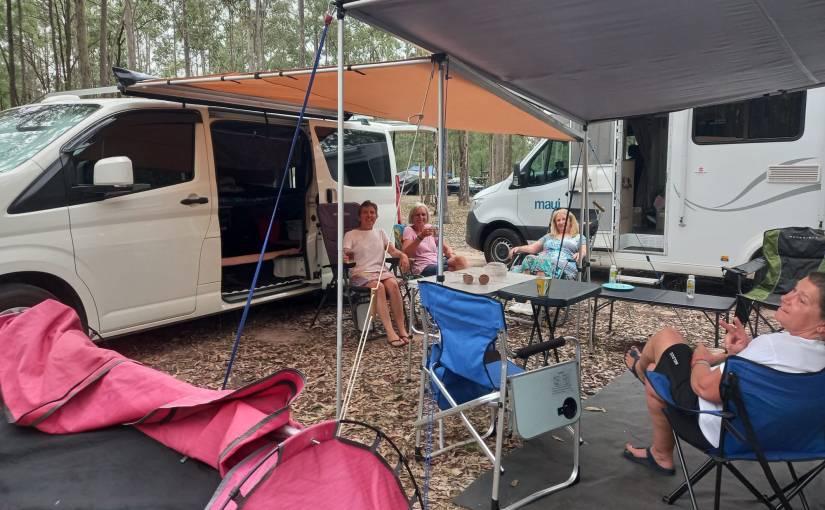
The corners of my mouth turn up. I stare at the shadow of carpet-lined ceiling and recall my friends leaping into action, jollying me along as the newest member of the group. As the novice – the princess in the rented, oversized, Maui – I got a lot of encouragement. Once they had packed up their compact, perfectly fitted-out campers they assisted me with mine, cooing over the toilet and shower, the electronic bed, the three-burner cooktop, and laughing as they guided me to empty the toilet cassette and unhook the grey-water hosepipe. They were supportive and enthusiastic, and determined that we would be well set up for the Xavier Rudd concert in the Hunter Valley the next night.

I climb down the ladder from my elevated nest. I lift the blind and peer out, see nothing but phantom shapes. The white vans glow grey, their awnings slicing the dark. The swag looks ominous – a long, black, indiscernible body. Apart from the shivering trees and the falling of exhausted leaves, there is no other movement. I can’t see the rain. I can’t see my friends. I can’t see any reason to go out into the eerie and wet world. I use the luxurious toilet, then climb back up to bed.

Curling up on my side I think of my gum boots, the mud, and the other competent campers who decided to setup on the grounds early. The rain started on nightfall, just as predicted. My gang are a clever bunch. I feel smug that I’m with them. They taught me to play a card game yesterday, the first in my life. It challenged me and made me happy. I pull up the doona, snuggle in and smile. Yes, this is fun.
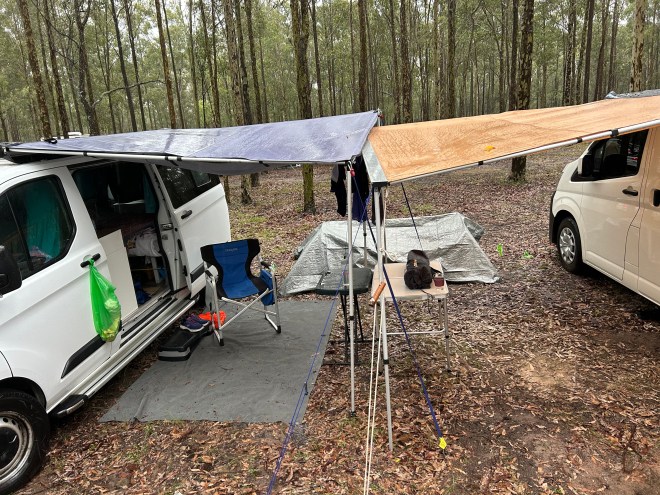
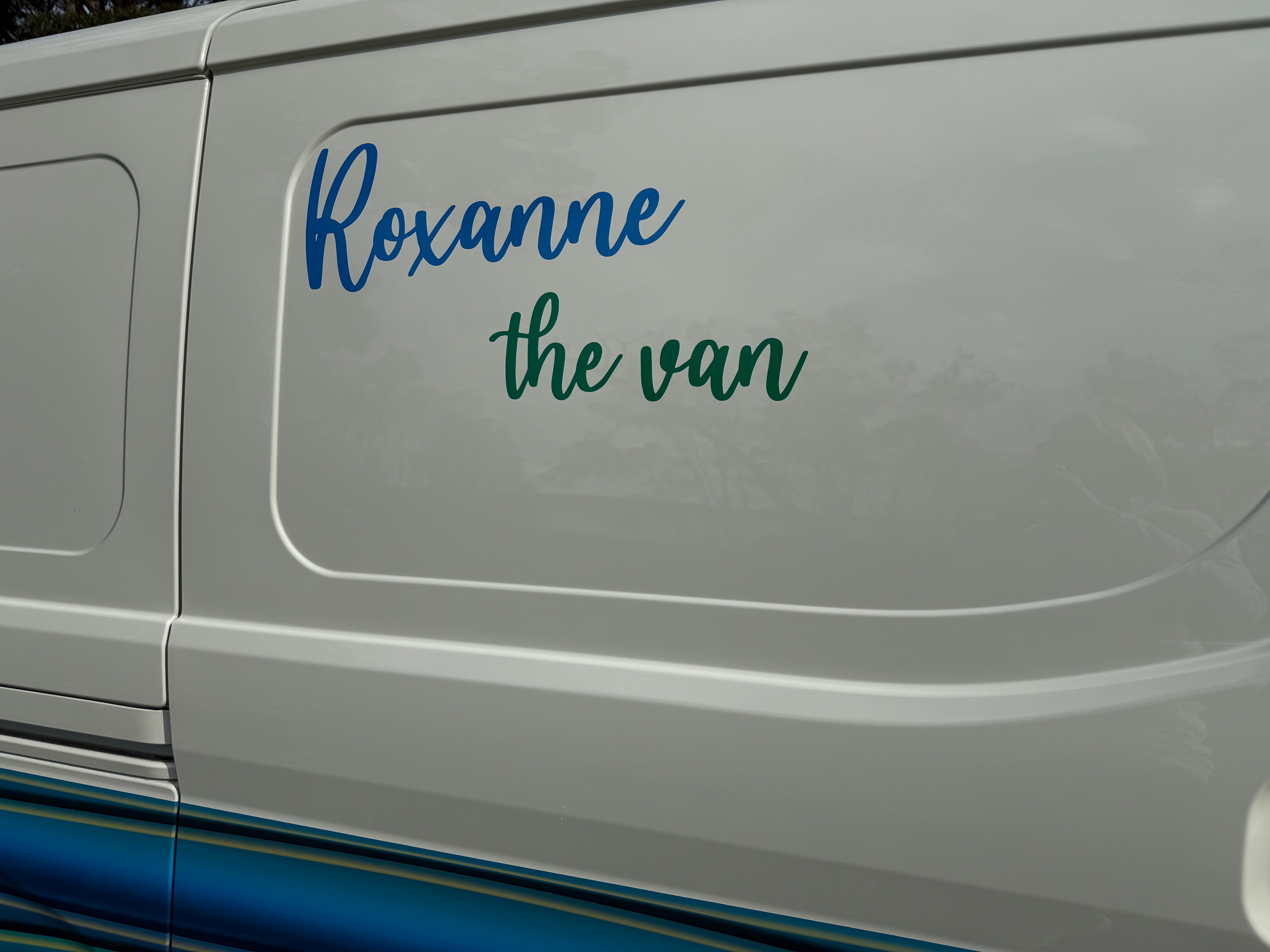
I had so much fun on this trip, I ended up getting my own campervan, a Toyota HiAce I had fitted out myself and called Roxanne. I’m looking forward to more adventures with my friends, fun times I’ll be sure to write about.

How have you found new ways to have fun in the various stages of your life?
The Publication Dilemma

Eight years ago, I started drafting a novel. The story came to me as I was settling in to my new life as a single woman. I journalled and talked to other women who were going through similar things – women in mid-life who were experiencing changes in their circumstances, bodies, hearts and minds. Complete with its three female characters, the story encapsulated many of those changes and how the women were transformed through dealing with them. The story may have been created in my mind, but it was as if it came to me on the wind, landing in my lap like a feather.

The message was clear: Ladies, you’re not alone and if you’re brave enough to be open and honest, to let go of certainty and take a chance, and to prioritise yourself (for a change), you’ll grow and you’ll fly.

The reason I’m sharing this is because the story is in danger of being grounded. The process of shaping it for publication is starting to feel like clipping its wings. I don’t quite know what to do next, but I know from experience that being open and honest helps.

For eight years I’ve gone over and over this story, drafting, editing, and re-writing it after each manuscript assessment, improving it but also shaping it to fit the genre of contemporary commercial women’s fiction. This genre is character and theme driven and according to professionals, this is where my novel sits. I get it. I agree. But, in some ways, it’s not fitting the mould.

For a start, a story with three protagonists (three character-arcs and three plots) has caused there to be a lot more words than today’s publishers want. It’s too big for the genre, especially for a debut novelist like me.

Another irregularity is that one of my characters leaves the other two and as a result has a partly separate story. Normally, in this genre, the main characters are intrinsically linked so that their actions impact on one another.

Mostly the story is set in Australia but this character returns to her birthplace, India, for a period of mourning. This leads to another editor’s issue: is it appropriate for me as a white woman to be writing from an Indian woman’s point of view? And why India? My answer is I’m fascinated by India, love the place and its people, and know women there who want their transformation story told too. And India has always been a part of this story, the one that chose me to land on.

So, what do I do? I have always said that I want to be traditionally published. I want the recognition, the kudos, the built-in marketing. But to be accepted I would need to make my novel fit the mould. And that’s not sitting well with me.

Is that because I’m a restless middle-aged woman who wants to do it her way and hopes to fly? Or because I’m a little woo woo and believe the story should remain as it arrived? Or because writing should be unconstrained art? Or simply because I’m running out of energy? I’m not sure, but I think I’m coming to the conclusion that traditional publishing isn’t worth the effort.

I’ll add one more reveal. My confidence rises when I’m happy with my writing, when I feel I’ve been genuine. It falls when I get back an editor’s report and try to make the writing fit a format. So, what is that telling me?

I want my novel to soar. I want people to relate, to get it, to be inspired by it. I’m willing to follow guidelines on good story-telling to give it the best chance. So I’ll give it one more makeover, pluck out a few extraneous scenes. But I must stay true to the story. I must write it how it wants to be written and include all I have to say.

It seems clear now that I need to be free of constraints, and when I write THE END this time, I need to be brave enough to publish it myself. Who knows what will come of it? But at least I’ll be setting it free.

WAR AND CONSCIENCE

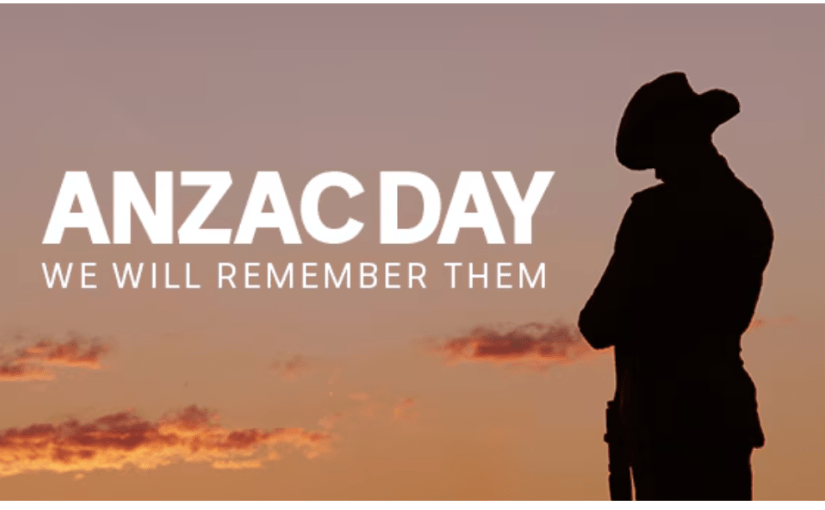
Yesterday, in Australia, we celebrated ANZAC Day. It was a public holiday. It began with diligent citizens gathering at memorial structures to commemorate and commiserate. We acknowledged those Australians and New Zealanders who fought for our land and our freedom; those who died and those who survived; those who were sacrificed and those who sacrificed themselves; those who lost loved ones and those whose lives were changed forever.

Grateful civilians and current armed force soldiers spent a minute thinking about the sacrifice and the benefits gained from war. We watched marches and honoured old soldiers with speeches.

I feel united with fellow Australians, no matter where they came from. Aboriginals, Irish, British, Italian, Maltese, Iranian, Indonesian, Indian, Japanese, Chinese, Vietnamese… whatever. In Australia, we’re a mix. We get along well.

I am a grateful civilian. In Australia, I feel safe.

Unfortunately, not everyone who doesn’t feel safe, who’s suffering in their country, can get in to this refuge, this paradise we call Australia. There’s an entrance fee to this party and being so exclusive, it’s high. Desperate people try to get in the back door. But they get caught and they pay. They must be invited and despite horrible need, the uninvited are rejected. Australia doesn’t want them unless there’s something in it for them.

Where they come from, there is war, there is famine, there is persecution and unrelenting hardship. The humane thing to do would be to let them in, give them a chance to start over, share what we have, share our good luck. For luck is all it is.

If we were born here, we hit the jack pot. If we were allowed to settle here, we won the lottery. Luck is what separates us. Our consciences should admit that.

But coming back to ANZAC Day: a war was fought so that we would remain lucky. It was won. With the eternal flame, Australians will be eternally grateful.

Grateful but conflicted. There is so much war in the world. People fight over land, over God, over who is the superior race. Huge numbers of people die. Soldiers, civilians, old people, innocent children. Governments spend a fortune protecting their piece of earth or attacking someone else’s. The lunacy is escalating.

In Australia this year, our government has spent about $50 billion strengthening our armed forces. Imagine what else could be done with that.

Imagine a world where the military funds were spent on restoring the planet’s health.

Imagine a world where humanity appreciated and respected others’ differences instead of divisively guarding similarities.

Imagine a world where people learned from one another, moving around as if the earth was one country, living where they liked, sharing resources. Imagine.

Imagine a world with no war.

Can it only be a dream? Sadly, for a long while, I think so. But dreams are there to be reached for. Dreams are goals, so make them for good.

It would be helpful to remember the ethical code of the ANZACs. No wounded comrade would be left behind on the battlefield if there was the smallest chance of saving them. They might have only known that person for a short while, but young men risked their lives to help. They had a conscience, a feeling of mateship, camaraderie, empathy. They could imagine themselves as the other.

That’s what we need to do. We need to imagine ourselves in the other’s shoes. We need to imagine we’re all mates. We need to imagine us all getting along and the earth being one. We need to imagine a planet where there was no need for war. We need to imagine a time where we could all be grateful.

Picture courtesy of ABC Australia 2021

Aussies Celebrate Australia

All Aussies love Australia and feel blessed to be here. We feel like we’re lucky because the land is beautiful, the climate is good, the flora and fauna are wonderfully unique. We feel safe and educated and secure. In all, our great, southern, sunburnt land is the jackpot of all countries to be a citizen of, no matter which end of the lucky-spectrum we fall.

But some Aussies are unhappy about the date our government chose to call Australia Day. That date, the 26th of January, is the date Arthur Phillip put up a British flag and claimed the land uninhabited and Britain’s. Some Aussies mistakenly believe it is the date Captain Cook sailed into Botany Bay. But do we care? Or do we just want to party and yell out to the world that this country is the greatest and we’re so happy to live here?

Mostly, we want to party. We want friends and family and the beach and the barbeque.

So, if the date offends a bunch of Aussies because of what it historically marks, why can’t we just change the date?

For the sake of peace, inclusion and Aussie mateship, is this really too hard?

A Plea from the Heart: The Referendum 2023

Tomorrow we’re being asked to vote in the Referendum. What a rare privilege we Australians have, being in a democracy where we all get to have a say in any changes to the Constitution (the rules for governing our nation).

What a shame that the original occupants of this land weren’t included like that back in 1901 when it was written. How different things would have been if they had. Mass stealing of children wouldn’t have happened, for one. Back then the aboriginal people weren’t seen as people so therefore, they weren’t relevant – which may be where the problems started.

Right now we’re being given the opportunity to correct the omission of First Nations people from the Constitution. We’re being offered a generous olive branch, a positive step forward. The body of representatives that is proposed to be included in the Parliament is the proposal put forward back in 2017 in the Uluru Statement from the Heart. Eighty percent of all aboriginal people want this. They see it as a step forward, as progress, as a way to express their needs and make proposals as to how those needs might best be met.

It isn’t a threat to non-aboriginals. No one is going to take your house or your family’s farm.

The Voice to Parliament is an advisory body only. Which is why some people say it doesn’t go far enough. But the Voice to Parliament will be able to advise whichever government is in at the time, regardless of their politics. Isn’t that a grand thing? Doesn’t that feel right? And that advice will be proposed by First Nations people themselves, by the people who are talking to all the ‘grass roots’ communities and mobs over this wide land.

The Yes vote is a soft approach. People say it comes from the heart. It does. But even the head can discern that it’s a step towards getting better outcomes for the Aboriginal People. That’s if we don’t let the noise confuse us. The strong, negative language used by the No voters is designed to frighten and divide us. Don’t go there. If you feel afraid, go back to basics. What is the actual proposal? What are the actual words?

Please, if you still don’t know, do your due diligence today.

The following links are basic definitions: not Yes and not No hype.

Referendum 2023 – The Constitution (aec.gov.au)

The Australian Constitution (peo.gov.au)

Voice to Parliament – Reconciliation Australia

If you want to witness a two-sided discussion that’s fair and good, I recommend the latest ABC Q & A. Q+A Live From Adelaide – Q+A (abc.net.au)

I am voting Yes and I’m voting with my heart and my head. My decision comes from a place of love and hope, the very place that the Uluru Statement came from. If you haven’t read it or listened to it, I implore you to do so. It’s enlightening.

View The Statement – Uluru Statement from the Heart.

No means no progress.

Yes means acknowledgement, acceptance and inclusion. Yes means we’re listening. Yes means the Constitution will be complete. And I’m proud to be part of that.

Politics in the Referendum

It’s inevitable that politics would get mixed up in the Australian public’s decision whether to include the First Nations people in our Constitution.

I’m writing this blog post only a month after the other Voice-related one, because I want to respond to John Howard’s comments in The Australian newspaper on 26th July 2023.

I have a huge respect for John Howard, Australia’s Liberal Prime Minister 1996-2007. So, I take his comments seriously. I’m glad I was able to vote for him. I’m glad that, as a woman, I am allowed to vote at all. Just as I’m sure indigenous Australians are glad that their inclusion in the Constitution in 1967 – as Australians – has allowed them a vote.

John Howard is quoted in the article as saying: “Shouldn’t we just be sitting down talking to each other? Not about the voice, not about reparations, not about treaties, but just talking about how to lift up Aboriginal people, and put them in the mainstream of the community, finding out ways of doing it.”

Well, yes! That would be terrific. Talking about lifting the Aboriginal people up and including them in the mainstream is a great idea. And that would best be done with a group of Elders who have the most understanding of the issues. And for continuity, since governments come and go, the group should be a separate body assured of its place in Parliament.

Mr Howard is concerned that the Voice to Parliament will create conflict about how to help indigenous people. That’s possibly true because there will always be differing opinions (and we can’t stop media hype) but the point is for the body to provide advice based on close knowledge and understanding of the issues. So, therefore, there is a possibility that the advice will reduce conflict.

We would also be hopeful that good advice aligned with the specific issues would reduce money wasted on schemes that don’t help.

I believe it’s best to leave out of this discussion any future treaty and reparations. These bigger issues complicate the proposal at hand. They are distracting, more contentious and would take a long time to work out. Therefore, the Albanese government not talking about them makes sense. Mr Howard’s suggestion that there’s subterfuge in the exclusion, to me isn’t warranted. Although both sides of government do like to play that game.

Finally, there is the issue of inclusivity of Aboriginal people into the mainstream. Mr Howard says: “We are profoundly and absolutely part of Western civilisation. Part of our culture is the Aboriginal culture, but the mainstream culture of Australia is not very Aboriginal.”

I agree with him that the best solution is to encourage all Australians to be in this mainstream, to “remain one people, living in one nation under one law which applies with equal force to all of us.”

But that does not negate my belief that privileged white people and indigenous Australians, because of their life experience, think differently and need different things. Having a Voice to Parliament will provide Aboriginal people with a closer and clearer expression of themselves.

As a reminder, all we are being asked is: do we agree to the addition of the following?

Paraphrasing, the added lines are that a body called the Aboriginal and Torres Strait Islander Voice can make representations to the Parliament and the Executive Government of the Commonwealth (the High Court) on matters relating to themselves. The Parliament will have the power to make laws in relation to the body’s recommendations.

Whatever politics you follow, find out as much as you can from as many places and people that you can. If there are Aboriginal people you can talk to, ask them what they think. If we believe we should be one Australia, put the political arguments aside as much as possible. Sometimes in the end, when we’ve done all we can with our minds, we have to make a choice from the heart.

Useful links:

Constitution Alteration (Aboriginal and Torres Strait Islander Voice) 2023 – Parliament of Australia (aph.gov.au)

Constitution alteration – Parliament of Australia (aph.gov.au)

Constitutional reform: FAQs – Benefits of reforming the Constitution | Australian Human Rights Commission

Australia’s Referendum on the Voice to Parliament

Later this year, all Australians are being asked to vote ‘yes’ or ‘no’ to a simple question that will add a few lines to our Constitution.

The question on the ballot paper will be:

“A Proposed Law: to alter the Constitution to recognise the First Peoples of Australia by establishing an Aboriginal and Torres Strait Islander Voice.

Do you approve this proposed alteration?”

When I first heard this proposal I had a bunch of questions: What does that even mean? Why is it necessary? Is it important to me? Doesn’t ‘special treatment’ add fuel to the Us and Them issue?

I admit my own ignorance and lack of enthusiasm when it comes to much politically associated news. I had heard snippets from the ‘Yes’ camp and the ‘No’. It seemed to me that even the First Peoples of Australia weren’t sure about it. I didn’t pay too much attention. Until now.

Much of what I have heard has been negative. The ‘No’ camp seems far more vocal. The media, which thrives on drama and bad news, and is not above misleading the public, is relishing the negative. I have discovered that there are many layers to the ‘No’ and all of them seem to be political and power oriented.

But this is not a political issue!

This is a Constitution issue. That is, it is an issue of the Australian public.

So, firstly: What is the Constitution?

The Constitution is a founding document (one of the most important steps in the process of Federation) that began on 1 January 1901 that sets out how Australia is governed. It overrides any other laws and can’t be changed by the Parliament of the day. The Constitution can only be changed through a vote by the people.

Interestingly, although it was put together by the six colonies and voted on by the people, not all people could vote. Most women and Indigenous Australians were not allowed to.

So, what are the proposed few lines? You can find them here: The Voice http://www.voice.gov.au

Briefly, the added lines are that a body called the Aboriginal and Torres Strait Islander Voice can make representations to the Parliament and the Executive Government of the Commonwealth (the High Court) on matters relating to themselves. The Parliament will have the power to make laws in relation to the body’s recommendations.

The body would be chosen by the Aboriginal and TSI communities and Elders.

Why have I become so interested in this and why has it become important? Because my instincts tell me that there is a scare campaign out there. I’m reminded of other minority groups seeking acceptance, and the fight of women for equality.

My gut says, of course there should be Aboriginal and TSI people representing themselves on matters that affect them, that if the Constitution was being written today, they would have a seat at the table and be contributing with their specific concerns in mind.

My conscience reminds me that I’m an educated white person born in this country, and therefore I have a privileged position. My own path has been easy. I don’t feel guilty about that, but I am aware that most, if not all, indigenous people have a much more difficult path. Their history, upbringing, health, isolation and education have all severely impacted their opportunities. In my position, I can barely imagine what their lives are like.

Many governments have tried to address these difficulties, and some have been reasonably successful. But each government prioritises differently, and programmes start and stop as parties come and go. There is instability and the programmes themselves are not necessarily designed by people who fully understand their suitability. Billions of dollars and many years have been wasted because Aboriginal and TSI people have not had input.

This is why the body, the Voice, needs to be made up of the Aboriginal and TSI people themselves. Their chosen representatives will understand their culture and the issues in their communities. It is why the body needs to be embedded within the Constitution.

The Voice is an advisory body, only. The intention is to direct government spending to achieve better outcomes. The Parliament will still have the power to take the advice or not.

The scare campaign reeks of politics; the ‘my policy is different from your policy’ and political party games undermine the simplicity and importance of the proposal.

Julian Leeser, an expert in Indigenous affairs who was the opposition’s Indigenous Australians spokesman until he resigned in order to campaign for the Yes vote, says:

‘The Voice will work on making remote communities safer, work to get children to school and keep them there, work to address the terrible infant mortality and renal failure in indigenous communities, and it will work to create local jobs and industry so we can break a culture of welfare dependency.

The Voice is not about two classes of Australians. It’s about eliminating the differences in economic and social outcomes that separate Indigenous Australians with other Australians.’

This sums up all the questions I had. I have also listened to discussions on whether the Voice goes far enough (in my opinion, it does) and whether treaties should come first (in my opinion, it would be a very long wait) but all that is too much to go into here.

I believe that giving Aboriginal and Torres Strait Islanders this recognition and chance to speak for themselves is fair and will ultimately make Australia even more democratic. I believe ‘Yes’ is the right choice.

Note: There are many good places to seek honest information. Be careful when reading from the media as there have been misrepresentations and lies.

https://voice.gov.au/

‘The Voice to Parliament: All the Detail You Need’ by Thomas Mayo and Kerry O’Brien. Recording of the interview at the Sydney Writers’ Festival https://omny.fm/shows/sydney-writers-festival/the-voice-to-parliament-all-the-detail-you-need

Tools to have conversations: https://yes23.com.au/

An Emerging Writer’s Spiel

When it comes up in conversation that I’m writing a novel, I’m usually asked what my book is about. I’ve always struggled with the answer to this, not because I don’t know what I’m writing but because I never know whether to tell the story or whether to reveal what it’s really about, it’s message.

If I was asked by a prospective publisher, I’d want to give my twenty second pitch. But even that befuddles me. There’s the advice that as an emerging (unpublished) author, a hook – something vibrant and catchy – is required. But that’s so subjective I can’t formulate one.

My genre is fairly clear, at least. It’s contemporary – probably women’s – fiction. But if a publisher put literary in that description, I’d be thrilled. Literary fiction is what I like to read. It’s what I admire.

So I’ve created an answer that merges story with message and I hope it sounds intriguing.

It’s about three friends who are dealing with the challenges common to women in middle life. It’s about their experience of love and loss, family and friendship, and the choices they make to rewrite future chapters of their lives. It’s set in Australia, India, and Ireland over the course of a year.

This draft will be finished by June – I’m going for positivity – and then I’ll have another look at that pitch and send off my manuscript to the highly selective world of agents and publishers. I’ll finally walk the talk and show all my commitment and perseverance.

If anyone has any advice for me, please post it here. Likewise, if you like my spiel, encourage me with a thumbs up.

Happy reading, dreaming, and writing, my word-loving friends.

The Gift of Giving

I would like to start a revolution, one that would reconfigure the giving on birthdays. Instead of receiving gifts, we could have the pleasure of giving a gift to someone or some organisation that really needs one!

If we could quit the trend to buy an object just for the sake of a birthday gift, we could: save money, save time, and save the planet!

That’s a good start, but here is the revolutionary part: once a year, on our own birthday, we could shout ourselves a gift – the gift of GIVING!

We could give to whatever charity has our attention at the time. It could be one we donate to regularly, a new one, or one that due to current circumstances – like drought, Covid-19 or bushfires – needs extra help NOW.

I am not suggesting we ignore other’s birthdays; if there is that perfect thing or lovely experience we could give, then give it. Make the phone call, visit, write on the card, just don’t buy something that’s not needed, or even wanted, just because of a tradition. Once upon a time, that tradition would have been a simple gesture, an acknowledgement, or perhaps a home-made meal.

The necessity of a bought gift is a commercial trick that encourages materialism. I am suggesting going back to basics, with a contemporary and outward looking slant.

The money you have saved not buying superfluous objects could go towards coloured pencils in a poor child’s school bag, rehoming a mistreated animal, or training a guide dog. It could go towards disease research, or educating disabled children in India, or reforestation programmes. You might prefer activism and like to help stop mining near the Great Barrier Reef, or live animal exports.

Whatever it is that touches your heart could be your chosen beneficiary! It is, after all, your birthday!

By breaking with tradition, we can save up for that one day a year when it’s all about us and give whatever we want.

Wouldn’t that make you feel all warm and fuzzy inside? Wouldn’t that be a great thing?

This is a call to action. Come join the revolution! 😊✌

PS

What have you received from well-meaning friends or family that you wish you hadn’t?

Have you got things stored in your cupboards that you don’t want, just because they were gifts? Perhaps regifting them to Vinnies or the Salvos could be the first step in breaking with tradition and someone less fortunate would benefit from the transfer. Also, the resources taken to produce the product would not be entirely wasted.

Have you ever been asked to contribute to a charity instead of giving a gift? How did you feel about that? Did it sit well with you or make you uncomfortable?

Contributing ourselves for our own birthdays, would avoid telling others what to do. My birthday has just been and it felt good to me!

Just for your interest:

The featured picture is of boys outside a slum in Mumbai sitting on parked bikes. I had just given them coloured pencils and notebooks, which I take especially for this purpose when I travel there. The kids are always delightful. My thanks, is a great photo and a feeling of gratitude.

The following are a few charities I support. What are yours?

https://guidedogsaustralia.com/

https://www.animalsaustralia.org/

https://www.indigenousliteracyfoundation.org.au/

https://www.indiability.org/

http://newlightindia.org/

Extreme Start to 2020

I was in India when the bushfires were ravaging Australia. Even in an ashram in a tiny village in Rajasthan, news reached me that the coastal town of Sussex Inlet, where my beloved river house sits, was in danger. Fires were out of control throughout the South Coast of NSW devastating bushland, National Parks, and towns.

Over December and January, at least thirty-four people and a billion animals died; 186 square kilometres of tree-covered land including 5900 buildings, were destroyed; people lost possessions and livelihoods; wildlife lost their food.

It’s depressing to think that some things won’t recover. The fires were too vast and hot. That which will recover, will take a long time.

But feeling depressed doesn’t help. There’s too much to do.

People are rallying to help. Communities are growing and bonding over the effort. Solutions are germinating, just as plants will.

Ironically, I was in the ashram to talk creatively about the environment. Despite the huge environmental problems in India, it is a place of such spiritual energy at its core, it’s inevitable that seeds of recovery are sprouting there.

The ashram was the location of a conference-like festival called Utasava Maa, ‘a transformative all female festival, uniting extraordinary women from across the globe to share, inspire and collaborate in response to the ongoing international repression and violation of the earth and her daughters.’

Women, the traditional carers and protectors of the communal environment, joined heads and hearts to create ideas about change, starting with ourselves and the most basic of local levels.

Like many of the other Western women, I was attracted to the festival by the passionate motivator, Elizabeth Gilbert, author of Eat Pray Love and Big Magic. This woman’s capacity to inspire and rejuvenate others is at goddess-level. To be in her company, and of others like her, for nine days in a soul-stirring environment, was life-changing.

On the eve of the end of 2019, Western and Indian women danced together. It was barefoot and free. We sat around the campfire wrapped in thick, woollen shawls, and listened to the guitar and the tabla, and the voices of those who sang or had something to say. We wrote things on paper, things we wanted to let go of, and burned them in the flames. We said goodbye to unhelpful things. It was a ritual that closed off the past and wiped the slate clean for the future. It was cleansing and uplifting.

Except, at home, the fires burned. The contrast was poignant.

I’m concluding that getting back to the ancient ways is a good place to start restoring health. But I’m not going to turn this Post into an opinion piece.

Despite the euphoria I felt at midnight on the other side of the world, reality is problematic. Since I’ve been home in Australia, the positivity I felt coming into the year, has been attacked several times.

Issues that lay dormant over the Christmas/summer holidays, have seeped through the cracks and emerged, persistent. Normal life is uncomfortable. It’s bills and emails, shopping and cleaning, responsibilities and duties.

Reality has a way of slapping you in the face if you get too carried away with dreams. A very dear friend, a passionate, loving, shining light of a woman, lost her struggle with cancer and died last week. Her light has gone out and she didn’t want it to. She had life to live.

It’s important that we live knowing that time isn’t endless. Not only is our time here on earth restricted, but it can be extinguished way before we’re ready.

My point is, that we should use each day well. Be positive and step forward. Do the things that you plan to do, despite the difficulties, the fear and obstacles; despite the chaos of real life. Think about the future, yes, but live each day with vigour, concern for others and care for the natural environment.

In National Parks, the motto is, leave nothing but footprints. But a national park is like an ashram. It’s the ideal. Ideas grow into deeds like seeds grow into trees. In the real world, leave your mark. Even on the smallest level, do something to make the world a better place. Raise the children to be community minded, grow a garden, lend someone your strength.

2020 is going to be another life-changing year for me, starting with moving house and ending with a publisher for my book. I do more than hope. I do something each day towards my goal; despite the everyday hassles and drama; despite what anyone says. My dreams mix with reality. They merge and flow and continue to grow with any fertiliser thrown at them.

Be uncomfortable. Be active. Do what you need to, to make 2020 a good one.

In the words of my guru, Liz G, Onward!


What will you do to thrive in 2020?