Politics in the Referendum

It’s inevitable that politics would get mixed up in the Australian public’s decision whether to include the First Nations people in our Constitution.

I’m writing this blog post only a month after the other Voice-related one, because I want to respond to John Howard’s comments in The Australian newspaper on 26th July 2023.

I have a huge respect for John Howard, Australia’s Liberal Prime Minister 1996-2007. So, I take his comments seriously. I’m glad I was able to vote for him. I’m glad that, as a woman, I am allowed to vote at all. Just as I’m sure indigenous Australians are glad that their inclusion in the Constitution in 1967 – as Australians – has allowed them a vote.

John Howard is quoted in the article as saying: “Shouldn’t we just be sitting down talking to each other? Not about the voice, not about reparations, not about treaties, but just talking about how to lift up Aboriginal people, and put them in the mainstream of the community, finding out ways of doing it.”

Well, yes! That would be terrific. Talking about lifting the Aboriginal people up and including them in the mainstream is a great idea. And that would best be done with a group of Elders who have the most understanding of the issues. And for continuity, since governments come and go, the group should be a separate body assured of its place in Parliament.

Mr Howard is concerned that the Voice to Parliament will create conflict about how to help indigenous people. That’s possibly true because there will always be differing opinions (and we can’t stop media hype) but the point is for the body to provide advice based on close knowledge and understanding of the issues. So, therefore, there is a possibility that the advice will reduce conflict.

We would also be hopeful that good advice aligned with the specific issues would reduce money wasted on schemes that don’t help.

I believe it’s best to leave out of this discussion any future treaty and reparations. These bigger issues complicate the proposal at hand. They are distracting, more contentious and would take a long time to work out. Therefore, the Albanese government not talking about them makes sense. Mr Howard’s suggestion that there’s subterfuge in the exclusion, to me isn’t warranted. Although both sides of government do like to play that game.

Finally, there is the issue of inclusivity of Aboriginal people into the mainstream. Mr Howard says: “We are profoundly and absolutely part of Western civilisation. Part of our culture is the Aboriginal culture, but the mainstream culture of Australia is not very Aboriginal.”

I agree with him that the best solution is to encourage all Australians to be in this mainstream, to “remain one people, living in one nation under one law which applies with equal force to all of us.”

But that does not negate my belief that privileged white people and indigenous Australians, because of their life experience, think differently and need different things. Having a Voice to Parliament will provide Aboriginal people with a closer and clearer expression of themselves.

As a reminder, all we are being asked is: do we agree to the addition of the following?

Paraphrasing, the added lines are that a body called the Aboriginal and Torres Strait Islander Voice can make representations to the Parliament and the Executive Government of the Commonwealth (the High Court) on matters relating to themselves. The Parliament will have the power to make laws in relation to the body’s recommendations.

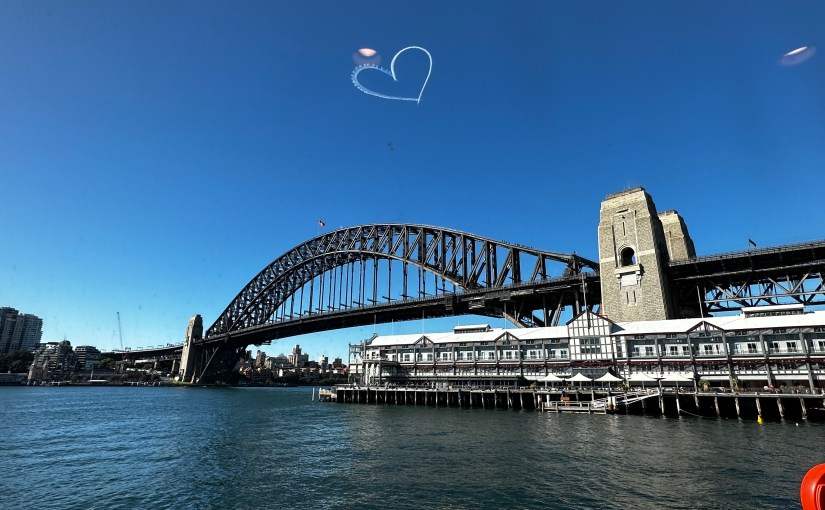
Whatever politics you follow, find out as much as you can from as many places and people that you can. If there are Aboriginal people you can talk to, ask them what they think. If we believe we should be one Australia, put the political arguments aside as much as possible. Sometimes in the end, when we’ve done all we can with our minds, we have to make a choice from the heart.

Useful links:

Constitution Alteration (Aboriginal and Torres Strait Islander Voice) 2023 – Parliament of Australia (aph.gov.au)
Constitution alteration – Parliament of Australia (aph.gov.au)

Constitutional reform: FAQs – Benefits of reforming the Constitution | Australian Human Rights Commission

Australia’s Referendum on the Voice to Parliament

Later this year, all Australians are being asked to vote ‘yes’ or ‘no’ to a simple question that will add a few lines to our Constitution.

The question on the ballot paper will be:

“A Proposed Law: to alter the Constitution to recognise the First Peoples of Australia by establishing an Aboriginal and Torres Strait Islander Voice.

Do you approve this proposed alteration?”

When I first heard this proposal I had a bunch of questions: What does that even mean? Why is it necessary? Is it important to me? Doesn’t ‘special treatment’ add fuel to the Us and Them issue?

I admit my own ignorance and lack of enthusiasm when it comes to much politically associated news. I had heard snippets from the ‘Yes’ camp and the ‘No’. It seemed to me that even the First Peoples of Australia weren’t sure about it. I didn’t pay too much attention. Until now.

Much of what I have heard has been negative. The ‘No’ camp seems far more vocal. The media, which thrives on drama and bad news, and is not above misleading the public, is relishing the negative. I have discovered that there are many layers to the ‘No’ and all of them seem to be political and power oriented.

But this is not a political issue!

This is a Constitution issue. That is, it is an issue of the Australian public.

So, firstly: What is the Constitution?

The Constitution is a founding document (one of the most important steps in the process of Federation) that began on 1 January 1901 that sets out how Australia is governed. It overrides any other laws and can’t be changed by the Parliament of the day. The Constitution can only be changed through a vote by the people.

Interestingly, although it was put together by the six colonies and voted on by the people, not all people could vote. Most women and Indigenous Australians were not allowed to.

So, what are the proposed few lines? You can find them here: The Voice http://www.voice.gov.au

Briefly, the added lines are that a body called the Aboriginal and Torres Strait Islander Voice can make representations to the Parliament and the Executive Government of the Commonwealth (the High Court) on matters relating to themselves. The Parliament will have the power to make laws in relation to the body’s recommendations.

The body would be chosen by the Aboriginal and TSI communities and Elders.

Why have I become so interested in this and why has it become important? Because my instincts tell me that there is a scare campaign out there. I’m reminded of other minority groups seeking acceptance, and the fight of women for equality.

My gut says, of course there should be Aboriginal and TSI people representing themselves on matters that affect them, that if the Constitution was being written today, they would have a seat at the table and be contributing with their specific concerns in mind.

My conscience reminds me that I’m an educated white person born in this country, and therefore I have a privileged position. My own path has been easy. I don’t feel guilty about that, but I am aware that most, if not all, indigenous people have a much more difficult path. Their history, upbringing, health, isolation and education have all severely impacted their opportunities. In my position, I can barely imagine what their lives are like.

Many governments have tried to address these difficulties, and some have been reasonably successful. But each government prioritises differently, and programmes start and stop as parties come and go. There is instability and the programmes themselves are not necessarily designed by people who fully understand their suitability. Billions of dollars and many years have been wasted because Aboriginal and TSI people have not had input.

This is why the body, the Voice, needs to be made up of the Aboriginal and TSI people themselves. Their chosen representatives will understand their culture and the issues in their communities. It is why the body needs to be embedded within the Constitution.

The Voice is an advisory body, only. The intention is to direct government spending to achieve better outcomes. The Parliament will still have the power to take the advice or not.

The scare campaign reeks of politics; the ‘my policy is different from your policy’ and political party games undermine the simplicity and importance of the proposal.

Julian Leeser, an expert in Indigenous affairs who was the opposition’s Indigenous Australians spokesman until he resigned in order to campaign for the Yes vote, says:

‘The Voice will work on making remote communities safer, work to get children to school and keep them there, work to address the terrible infant mortality and renal failure in indigenous communities, and it will work to create local jobs and industry so we can break a culture of welfare dependency.

The Voice is not about two classes of Australians. It’s about eliminating the differences in economic and social outcomes that separate Indigenous Australians with other Australians.’

This sums up all the questions I had. I have also listened to discussions on whether the Voice goes far enough (in my opinion, it does) and whether treaties should come first (in my opinion, it would be a very long wait) but all that is too much to go into here.

I believe that giving Aboriginal and Torres Strait Islanders this recognition and chance to speak for themselves is fair and will ultimately make Australia even more democratic. I believe ‘Yes’ is the right choice.

Note: There are many good places to seek honest information. Be careful when reading from the media as there have been misrepresentations and lies.

https://voice.gov.au/

‘The Voice to Parliament: All the Detail You Need’ by Thomas Mayo and Kerry O’Brien. Recording of the interview at the Sydney Writers’ Festival https://omny.fm/shows/sydney-writers-festival/the-voice-to-parliament-all-the-detail-you-need

Tools to have conversations: https://yes23.com.au/