Is Travel Worth the Trouble?

It’s been said that we travel not to escape life, but for life not to escape us. As I faced my most recent travel trials, I had pause to reflect on this and wonder if it was true.

I enjoy my life at home. Fortunately, I have no reason to want to escape it. I’m retired; I live by the sea; my friends and family are nice; the climate is good and there’s little danger. But I’m often tempted by images of other beautiful landscapes and stories of different cultures and find myself hurtling towards another trip, just to experience more.

When we’re travelling, we’re learning, we’re adjusting, we’re seeing, hearing, smelling, and feeling new things. That’s where the statement proves true. Life is bigger. And even when there’s challenges, as often there are, it’s worth it.

On my way to Croatia from Sydney, I hadn’t even left Australia before I faced my first one. A one hour stop in Perth grew into twenty-one hours due to a mechanical problem. Six hours waiting in Perth airport turned into a scramble at 10.45pm for one of the few taxis around, an online search for a hotel (thank technology for smart phones and Booking.com), a late night dinner order, a one hour phone call to Webjet to change my connecting flight Rome to Dubrovnik (I can’t praise Webjet more highly for sorting this out for me), an email to my travel agent to cancel my first day’s arrangements and another hotel booking for my midnight arrival in Rome. By Sydney’s clock, it was 2am by the time I was able to rest. I had achieved what I needed to, despite not normally functioning well at night, despite being afraid of failing somehow, despite not having anyone to share the stress with. I went to bed feeling it was all par for the course and proud of myself for managing. When my fellow travellers and I congregated at the gate for the flight the next day, we felt friendly and exchanged stories about the night, the connections, the reasons for our trips. We were unified and while waiting for our luggage in the almost deserted Rome airport, we helped one another activate our eSims and gathered in a group to make our way to the not-so-easy-to-find airport hotel. There was a feeling of camaraderie which somewhat compensated for the vexation. As a solo traveller I find myself magnetised to smiling middle-agers (usually women) when I need support. A one-minute connection often resolves a problem or boosts my resilience.

The next day, on hearing that an airport ground-staff strike in Rome (that followed the nationwide train strike) would mean my luggage might not get loaded, I stuffed essentials and two days’ worth of clothes into my carry-on daypack and headed back to the terminal. The check-in guy was reassuring – Don’t worry about it, he said in his thick Italian accent. So I chose not to. I had done everything I could to prepare for the worst and still felt optimistic about the best. When my luggage appeared on the Dubrovnik airport carousel, I was elated and excited again about my holiday. I had notched up my resilience level and learned I could cope. I was in a new land, and it was worth it. As I stepped into the sparkling Adriatic Sea and swam as the sun went down, I counted my blessings and acknowledged that life was indeed, not escaping me.

Next post, I’ll share my trip to Croatia and Slovenia, recommend some fabulous fun Must Do adventures and share my take on joining a small group hiking tour. It wasn’t all easy, but it was all worth it.
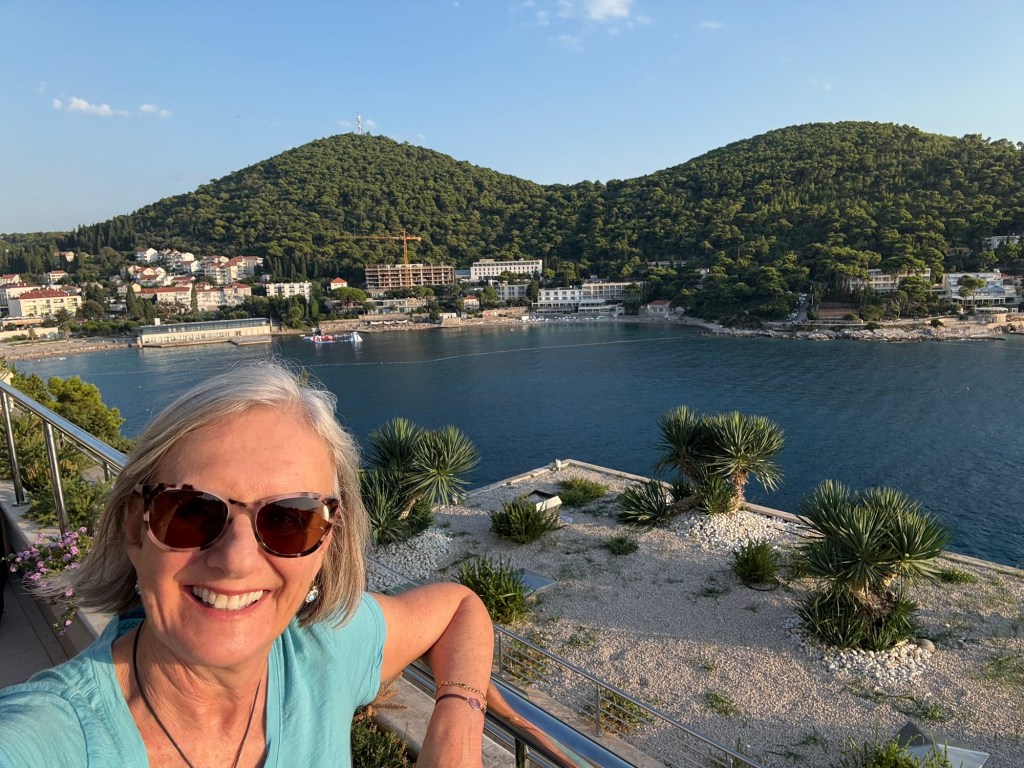
Arrival in Dubrovnik

To Be An Activist

What Does it Take to be an Activist?

It takes courage – courage to believe in yourself, courage to face opponents, courage to be able to argue the facts, and stand up to those who try to undermine you.

It takes anger – anger against what you believe to be wrong, harmful or unjust.

It takes confidence – confidence to stand alone, lead or support a minority, confidence to stand with those who are weaker, discriminated against and less powerful, confidence in your own judgement.

It takes knowledge – knowledge of the facts, of what is hidden, of what is manipulated, knowledge of the injustice, knowledge of the consequences.

And it takes time – time to gain a thorough understanding, time to plan, time to gather troops.

Activism is difficult. It can be uncomfortable, alienating, dangerous and time consuming.

To be an activist is to be clear on what is right and wrong.

Simply standing up for those around you who are discriminated against – a senior person, a junior person, a fearful person – is activism. Making troublesome choices that care for the environment, living creatures and society – is activism. Joining a group for the betterment of the community is activism.

Those activists who go beyond their immediate world and challenge those with the power, those who lead a cause that affects others, will often be persecuted. They are presented as troublemakers, irrational, stupid and wrong. Their act is misrepresented and undermined by deflection, by the cause itself being manipulated or the action being scrutinised to overemphasize the faults.

There have been many activists in history who have suffered greatly for their cause. They have been jailed, tortured, demoralised, lied about, joked about and killed.

The point of this Blog Post is – activists should be respected, whether you agree with them or not. Because, they are not fighting a cause to be famous or rich or to have something to do. They fight to achieve what they believe is right. And if you look back in history, what may have started out as something trivial, laughable and irrational, has turned out to be something important.

The Bishnoi people of Rajasthan India, back in 1730, were the original “tree huggers.” They died trying to save their forest. This literal, but derogatory term, is used frequently to belittle defenders of the environment, even in “environmentally conscious” Australia.

At one time, in the southern states of America, Eleanor Roosevelt was told, “You have ruined the niggers. They weren’t race conscious until you started hobnobbing with them.” This outstanding humanitarian of the 1940s and 50s was maligned by sexual allegations and malicious jokes, totally designed to undermine her.

The fight against cruelty to animals, discrimination, the decimation of biodiversity, food wastage, water pollution, mining in sensitive areas, and air pollution, are all examples of just causes. We need to do our best to do no harm, to contribute to the betterment of the world’s health, to think as a member of society and the global community, and not purely as an individual.

But if we wish to make a large impact, we need to have the qualities and skills of an activist. We need to focus on one issue. We need to care so much about that issue that we don’t care what people think.

Young Greta Thunberg hasn’t chosen a small issue or a straightforward one. It is one of the most complicated and controversial issues of our time. The discussion around climate change is both scientific and emotional. I used to say I wasn’t a fan of Greta’s. The sixteen-year old embarked on her mission when she was thirteen. She is a child, easy to use, belittle and dismiss. I have read the arguments against her, the hypotheses and the scathing accusations. I wasn’t going to be manipulated. Then a friend, disappointed in my assessment, gave me the book of her speeches. Her desire is straightforward: Adults and World Leaders – listen to the scientists, read the data, inform yourselves and act urgently to stop the increasing temperature of the earth. If you agree that the earth is warming, there is good reason to act urgently. If you agree with the scientific facts that she refers to, there is good reason to act drastically.

Greta is told to stop being disruptive, stop scare mongering and go back to school to finish her education. She says she will, as soon as the leaders start taking action, because without that, there is no point.

Look at history. Don’t dismiss what Greta says before thinking and learning about it. And don’t hate her for being an activist.

The humanitarian, Urmi Basu, recently advised me, “If you really want to know what’s going on in a place, find out what the activists are doing.” Those few words have changed my entire way of thinking.

It’s not likely I will ever be a leading activist. But I will do my best to contribute to the world’s well-being. I vow to remain open minded, curious, community minded, environmentally careful and more courageous than comfortable. My form of activism will be small and spread wide. I will write about issues that I care about. And in that way, I will call myself an activist.

Will you be one too?


Reference:

Greta Thunberg No One is Too Small to make a Difference.

“Everyone and everything needs to change. But the bigger your platform, the bigger your responsibility. The bigger your carbon footprint, the bigger your moral duty.”

Urmi Basu, founder of New Light India, a refuge for children and young adults at risk in the red-light district of Kolkata. www.newlightindia.org

Brene Brown, Research Professor, public speaker, writer and social worker who says, “Integrity is choosing courage over comfort.”

Eleanor Roosevelt, American first Lady 1933-45, diplomat and humanitarian, activist until she died in 1962, for child welfare, housing reform, equal rights for women and racial minorities.

“Do what you feel in your heart to be right – for you’ll be criticized anyway. You’ll be damned if you do, and damned if you don’t.”

“One’s philosophy is not best expressed in words; it is expressed in the choices one makes… and the choices we make are ultimately our responsibility.”

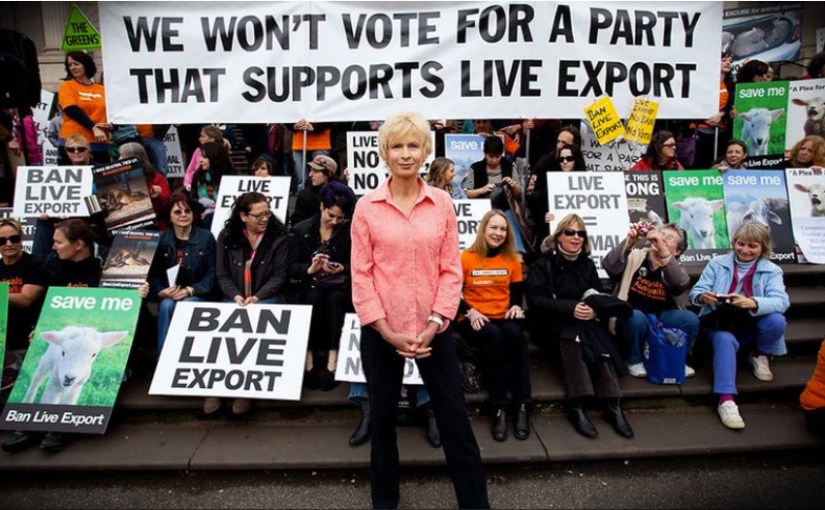
Animals Australia https://www.animalsaustralia.org/ Photo credit.

Extreme Start to 2020

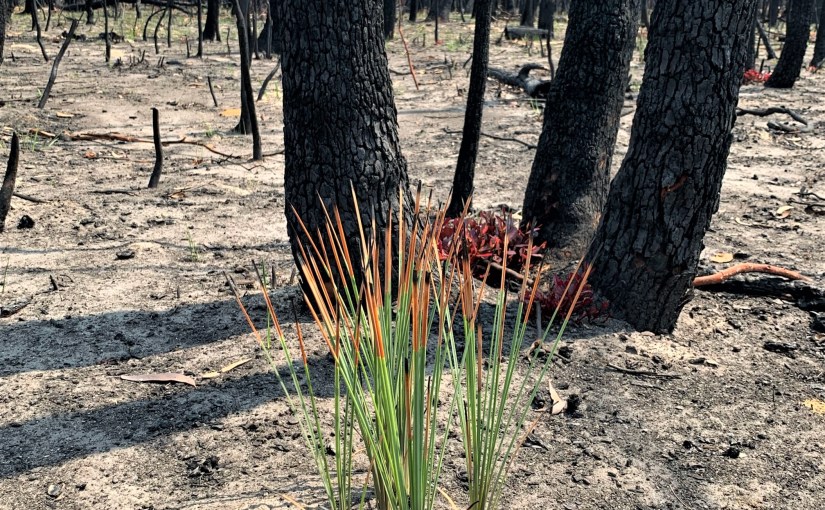
I was in India when the bushfires were ravaging Australia. Even in an ashram in a tiny village in Rajasthan, news reached me that the coastal town of Sussex Inlet, where my beloved river house sits, was in danger. Fires were out of control throughout the South Coast of NSW devastating bushland, National Parks, and towns.

Over December and January, at least thirty-four people and a billion animals died; 186 square kilometres of tree-covered land including 5900 buildings, were destroyed; people lost possessions and livelihoods; wildlife lost their food.

It’s depressing to think that some things won’t recover. The fires were too vast and hot. That which will recover, will take a long time.

But feeling depressed doesn’t help. There’s too much to do.

People are rallying to help. Communities are growing and bonding over the effort. Solutions are germinating, just as plants will.

Ironically, I was in the ashram to talk creatively about the environment. Despite the huge environmental problems in India, it is a place of such spiritual energy at its core, it’s inevitable that seeds of recovery are sprouting there.

The ashram was the location of a conference-like festival called Utasava Maa, ‘a transformative all female festival, uniting extraordinary women from across the globe to share, inspire and collaborate in response to the ongoing international repression and violation of the earth and her daughters.’

Women, the traditional carers and protectors of the communal environment, joined heads and hearts to create ideas about change, starting with ourselves and the most basic of local levels.

Like many of the other Western women, I was attracted to the festival by the passionate motivator, Elizabeth Gilbert, author of Eat Pray Love and Big Magic. This woman’s capacity to inspire and rejuvenate others is at goddess-level. To be in her company, and of others like her, for nine days in a soul-stirring environment, was life-changing.

On the eve of the end of 2019, Western and Indian women danced together. It was barefoot and free. We sat around the campfire wrapped in thick, woollen shawls, and listened to the guitar and the tabla, and the voices of those who sang or had something to say. We wrote things on paper, things we wanted to let go of, and burned them in the flames. We said goodbye to unhelpful things. It was a ritual that closed off the past and wiped the slate clean for the future. It was cleansing and uplifting.

Except, at home, the fires burned. The contrast was poignant.

I’m concluding that getting back to the ancient ways is a good place to start restoring health. But I’m not going to turn this Post into an opinion piece.

Despite the euphoria I felt at midnight on the other side of the world, reality is problematic. Since I’ve been home in Australia, the positivity I felt coming into the year, has been attacked several times.

Issues that lay dormant over the Christmas/summer holidays, have seeped through the cracks and emerged, persistent. Normal life is uncomfortable. It’s bills and emails, shopping and cleaning, responsibilities and duties.

Reality has a way of slapping you in the face if you get too carried away with dreams. A very dear friend, a passionate, loving, shining light of a woman, lost her struggle with cancer and died last week. Her light has gone out and she didn’t want it to. She had life to live.

It’s important that we live knowing that time isn’t endless. Not only is our time here on earth restricted, but it can be extinguished way before we’re ready.

My point is, that we should use each day well. Be positive and step forward. Do the things that you plan to do, despite the difficulties, the fear and obstacles; despite the chaos of real life. Think about the future, yes, but live each day with vigour, concern for others and care for the natural environment.

In National Parks, the motto is, leave nothing but footprints. But a national park is like an ashram. It’s the ideal. Ideas grow into deeds like seeds grow into trees. In the real world, leave your mark. Even on the smallest level, do something to make the world a better place. Raise the children to be community minded, grow a garden, lend someone your strength.

2020 is going to be another life-changing year for me, starting with moving house and ending with a publisher for my book. I do more than hope. I do something each day towards my goal; despite the everyday hassles and drama; despite what anyone says. My dreams mix with reality. They merge and flow and continue to grow with any fertiliser thrown at them.

Be uncomfortable. Be active. Do what you need to, to make 2020 a good one.

In the words of my guru, Liz G, Onward!


What will you do to thrive in 2020?