Get Out There

The benefits of facing your fears and pushing yourself to go outside your comfort zone, are exponentially rewarding. Each time you achieve something on your own, you buoy up your confidence and your ego, and that means you can go on to to do even more adventurous things.

Visiting a foreign country on your own seems to be something most people are afraid of, or maybe it’s just women. But as I’ve said before, the advantages, like being adopted by strangers and following your own interests and timetable, outweigh the disadvantages. Once you’ve done it, it gets easier. I’d recommend going somewhere similar to home first then stepping up the ante. I started with domestic travel in Australia, then moved on to Ireland, and now it’s India.

Exploring on your own, day or night, seems scary to some, as well. I know I’ve talked about this before but I want to reinforce that it’s worthwhile. I want to share some examples I experienced in India to convince you.

Catching the train from Mumbai to Goa, nine hours on my own, was far easier than I anticipated. I did need help finding the platform but that wasn’t bad. I brought my packed lunch and mini-thermos of masala chai, and found that tea, snacks and lunch were provided! Mind you, I wouldn’t eat it, but that’s pretty convenient.

Hiring a driver is essential for safe and time-efficient site-seeing in a place like India but it’s not necessary for short trips with a purpose. I could have opted for hotel transport to and from the Jaipur Writers Festival but choosing to take the auto rickshaw was fun and gave me some of my best photos. And a real taste of being a local. Apart from motorbikes, this is one of the key ways for locals to get around. They’re really cheap and give you an authentic experience.

On my first night in Varanasi, I went along the promenade of the Ganga to survey the area before dinner. Being sensibly cautious I first asked the hotel staff if it was safe to do so, since it was dark. Their answer was absolutely. There were so many people going about their business: chatting, bathing in the holy river or sending candles off in little foil trays with a prayer. A young man started walking alongside me asking, where are you from? The usual conversation starter! Did I feel threatened? Not at all. Was I wary? Of course! When he asked if I’d like to see the cremation site, I said yes, but it wasn’t like I was following him up a back alley. I was in plain view of everyone and he offered pieces of information which were helpful. When he offered to guide me the next day, I firmly told him that I already had a guide, gave him 100 rupees (AUS$2) to make him happy, and left. It was a positive start to the trip.

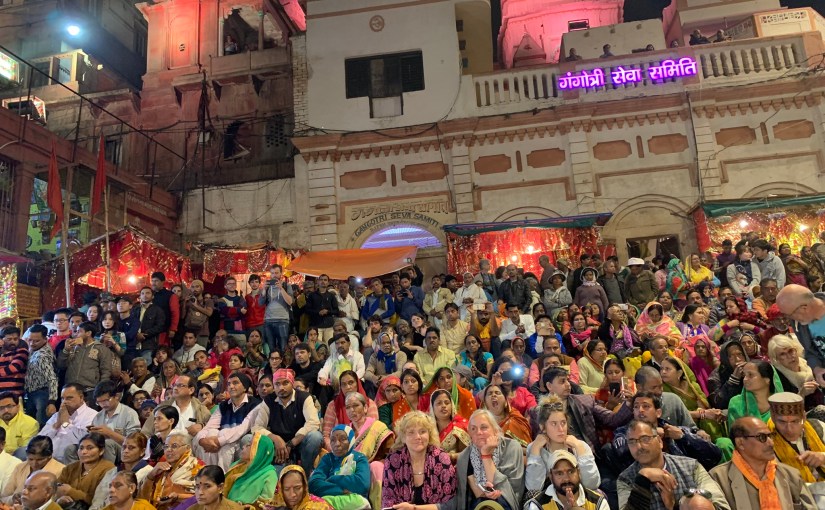
The next night, I attended a religious festival, which happened to coincide with my being there. There was a huge number of people and a lot of noise. As a single, I could climb over people that were seated at the front to perch myself in a tiny spot. I squeezed in to cross my legs next to a dark, sari-clad lady who smiled, made a bit more room, then helped me put red paste on my forehead. She even shared flower petals with me. I was delighted and I think she was too. Returning to the hotel, a kilometre walk along the Ganga bank, I got even closer to the cremation site than the night before. About five pyres burned, flames reaching metres high and smoke billowing, stinging my eyes while my ears and chest vibrated with the loud beating of drums. I finished off the evening with feeding a mother dog and her four puppies, and three cows, my left over dinner of naan bread and vegetable kebabs. (I’d asked the restaurant to pack it in a takeaway bag for my lunch!) This whole experience, which I wouldn’t have had if I’d been too anxious about going out, will always stay with me as a highlight.

Finally, in Kolkata, I left my lovely hotel, a cocoon of peace and safety (but also rather un-thrilling for dinner for one), and discovered a buzzing hive of brightly-lit activity, just outside the gate. Night markets were right there and as I stepped through the crowd of buyers and sellers, I watched as locals examined the clothes, stainless steel pots and embroidered tablecloths. I even bought a couple of things myself. Young people gathered around food stalls and stood eating dishes that I now recognised. The aromas of sweet spices and garlic made me hungry so I pressed on to the rooftop bar and restaurant recommended to me by my guide earlier in the day. I was thrilled that the atmosphere was both vibrant, enhanced by contemporary (Bollywood-style) music, and comfortable, with white cane chairs, orange cushions and marble table tops. And the food was tasty and inexpensive. It was another authentic experience that I wouldn’t have had if I stayed in the hotel.

I want you to understand that these moments not only enhance my travel experience but also help me grow as a strong and curious person. These are the building blocks for developing a joyous and purposeful life and I hope I can encourage you to take the first step towards doing this for yourself. We can all do it if we start with baby steps. It’s taking a leap of faith, even if it’s off the bottom step first.

“Be brave. Without bravery, you will never know the world as richly as it longs to be known. Without bravery, your life will remain small – far smaller than you probably wanted your life to be.”
Elizabeth Gilbert.

PS Adventures don’t always run smoothly. Things do go wrong and they can hurt. But whether they’re negative experiences or learning experiences is how you view it. I’ve had worse but I’ll tell you this tale because I see it as funny!

On my last day in Varanasi, I decided to see an Ayurvedic doctor, as much for the experience as a curiosity about advice he would give me. I followed a hand-drawn map scribbled on a napkin by my guide the previous day. This was challenging and fun, a bit like orienteering. I had to catch a boat first, a ride of 30 minutes, and get off at Assi Ghat. Then I turned left at the steps and right at the chai shop and past the ATM and up to a big house on the right. On the way, I was stopped by a thin woman carrying a toddler and an empty baby bottle. ‘No money,’ she said. ‘Baby formula, milk!’ And she waved the bottle at me. ‘No money, milk for the baby,’ she begged again. Well, what could I do? I asked, ‘Where do I get the formula?’ ‘The shop, follow!’ she said, beckoning me with a wave of her hand. I followed her to a shop twenty metres away and she requested the formula from the shop owner. ‘Two,’ she suddenly appealed, touching my arm and leading my gaze to the toddler. So again what could I do? Okay, two! I was surprised at the cost and exclaimed it. The shop owner showed me the box and the price was printed on the packaging. ‘Okay!’ I nodded, reaching into my purse, mumbling to myself, No wonder she can’t afford it! The baby pinched my arm, a little painfully, in gratitude. He was quite strong!! I took their photo, which was reverse begging really. I love my people photos.

So….I went to the doctor. I stepped past the lazing cows and into his house foyer. He spoke English, was kind and intelligent and basically told me I was going to be fine. Ayurvedic doctors are free so of course I believe him. This was a truly positive experience.

Back to the lady and toddler. I sent a message to my guide saying how helpful he’d been in his recommendation of the doctor and map drawing. I said something brief about the lady and buying milk. He replied that I’d been ripped off, that she would take it back to the shop and get a refund. 600 Rupees (AUS$12) it cost me! I sent the photo and he sent back, ‘Ya, I know dis bloody leady.’ This made me laugh at myself so hard, I may have looked crazy. Really, did it hurt? No! Did I learn something about life in a hard world. Yes. About myself. Yes! So end of story. Another great experience!

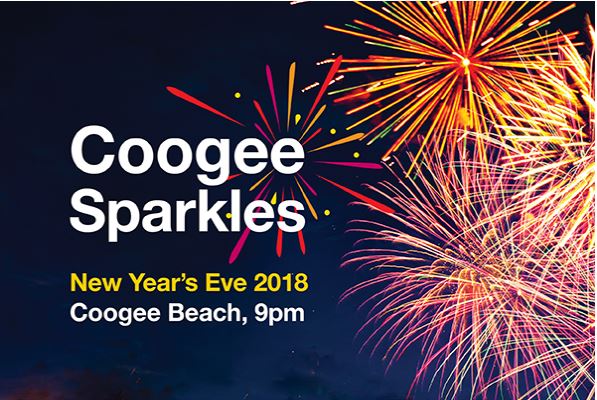
New Year Fireworks and Goals

The new year has begun. 2019. It started with the explosion of fireworks, live and on the TV, the abrupt bangs and crackles heard over the low roar and whoosh of the sea, cheering voices and music. The windows were wide open, letting the heat out and the cool breeze in, and the sounds were indistinguishable, the reality from recorded.

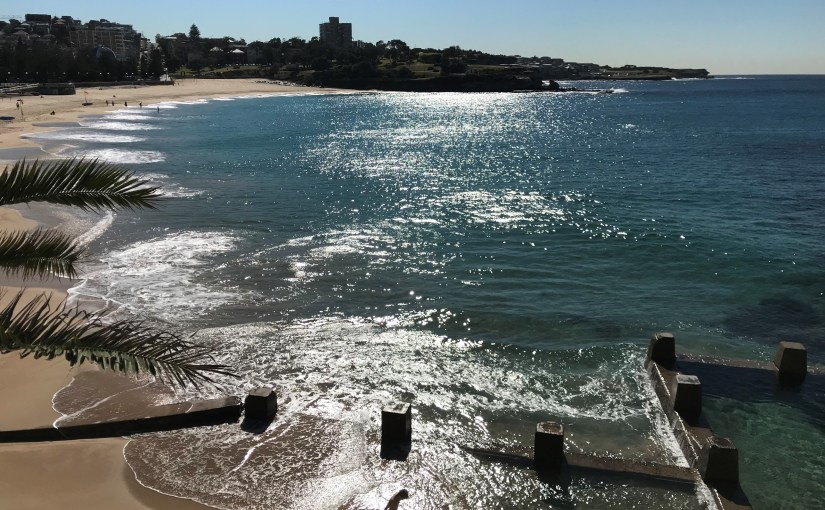
New Year’s Eve was a quiet one for me and I couldn’t have been more content. Sharing Australian prawns, Sydney rock oysters and French champagne with an old friend. Cooking up a Thai chicken curry and eating alfresco, glad that the humidity had been washed away by the rain shower. Walking a breezy kilometre along the cliff to the park that overlooks Coogee Beach and the headland.

The fireworks at 9pm attracted families, locals and holiday-makers. The crowd was cheerful and festive. Kids had glow-sticks, parents had picnic blankets, cheeky people had sneaky drinks. Brave dogs paced next to their families, as excited as their humans. The fireworks were varied, colourful and constant for twenty minutes. Everyone seemed happy. (Presumably, those who don’t like fireworks or crowds and those whose animals are frightened, stay at home.) Fireworks were followed by a walk along the promenade and giant serves of salted caramel and double chocolate ice creams in a cone.

The simplicity and ease of the evening, along with friendship, community vibe and foodie indulgence, were what brought on the feeling of contentment. I was in a happy place. And it was the close of a big year. 2018 had its challenges: ongoing divorce proceedings, the death of my beloved chocolate Labrador, and breast cancer. But there were also many wonderful things: the road trip up the north coast to Lennox Head, the writing workshop with author, Fiona McIntosh, in SA, another road trip in Donegal, Ireland, doing research for my novel, and the completion of the first draft. All the while I had the support of caring, loving family and friends. All that deserved fireworks, and my gratitude!

So, to my goals for 2019: take better care of my body, feeding it champagne and ice cream in fewer doses; finish a polished manuscript, one good enough to present to a publisher; write every day and continue this weekly blog; maintain and enhance my relationships and give back to those who love me; have fun travelling; move house; find another dog to love; be kind, to myself as well as to others.

Considering I have a good chance of achieving my goals, I figure I have a lot to be content with. I wish you all good health, good fortune, and good goals to go after. Have a happy 2019.


Thanks to Randwick City Council https://www.randwick.nsw.gov.au/community/whats-on/coogee-sparkles and my own many blessings.


Face Work

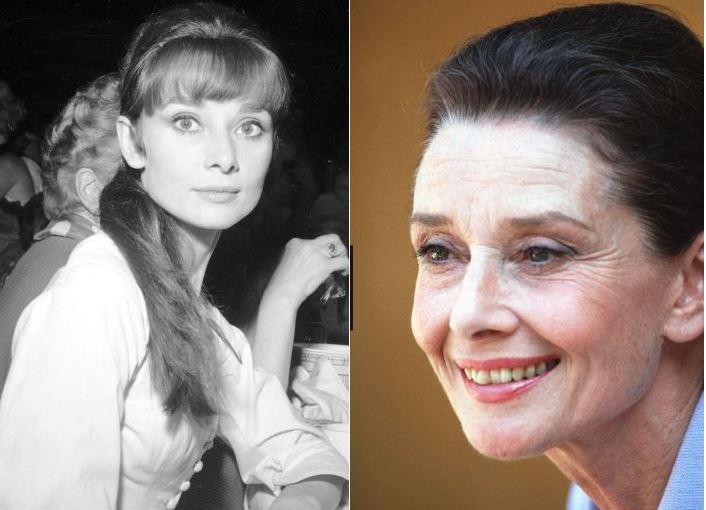
Would we love our friends more if their faces were less wrinkled, less spotted and less saggy? Would we love them more if they were ‘prettier’ or their eyebrows were higher? Would we love them more if their lips permanently pouted?

Of course not!

Loving our friends has nothing to do with how well their face defies age. It has everything to do with who they are, how they think and what their values are. We like someone when we share interests or they excite us with new ones. We like them because of how they behave, what they do and what they say. Their attention, conversation and empathy are what’s going to make us think, what a great friend, I love this friend!

Not how they look!

It’s the same the other way around. Our friends aren’t going to love us more if we have a firm, plump face. And they aren’t going to love us less for gathering grooves and sagging.

Grooming is different. Grooming is about personality. Grooming is superficial, and I don’t mean that in a derogatory sense. I mean it’s an outer layer that we can don or discard, according to how we want to present ourselves. We tend to hang around people who groom a similar way. We judge people by how they look, and that’s okay if it’s just the grooming we’re judging. It’s human nature to assess if someone is like us or not.

Some people don’t care what they look like. Some care a lot. (Some people have no choice in the matter, but they’re not who I’m talking about.) But what we wear, how we do our hair or how we decorate our faces, is just a temporary effect. It is a choice made for effect.

Don’t get me wrong. I understand the desire to stay looking younger and ‘prettier.’ In my forties, I had Botox because I was worried about my frown and drooping eyes. I didn’t like the signs of aging. But then I realised that most of my friends weren’t having Botox. They were aging naturally, and I loved them just as much. My son used to make faces at me when I laughed because he knew my face well enough to observe the distortion in my face. He loved me well enough to let me know he preferred the natural look.

I’ve noticed that it’s hard for people to stop doing ‘work’ on their faces once they start. I know that Botox leads to collagen. All that paralysing, lifting and plumping needs to continue to keep up with the aging process. And it doesn’t keep up! It twists and pulls out of shape. It leads to a false, weird look. If our friends were doing this, we’d want them to stop. We’d want our friends to stop us!

Changing our skin through use of a needle or knife reveals an insecurity. And a belief that people will love us more if we look ‘better’. My argument is that that can’t be so, that they don’t love us in the first place if they are so affected by how young or attractive we look.

We love our friends because of what’s on the inside. So lets pay more attention to that. Let’s keep our minds, our hearts and our bodies healthy. Keep learning, be curious and be interested. Be kind, compassionate and thoughtful. Eat well and be active to keep fit.

Be a good friend. Love your friend for who they are. And remember that your true friends will love you no matter how your face ages. They will love you more for the light and energy that shines through your eyes.

Health Diligence

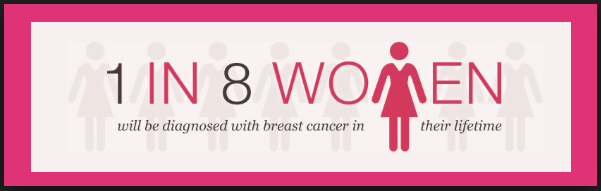
In August this year, I was diagnosed with breast cancer. I don’t usually get explicitly personal in my blog posts, but I believe there is value in sharing my experience. Cancers are extremely common and for good reason people are afraid of it. I was lucky. Mine was detected early. The health care system in Australia encourages us to get regular testing that will alert us to disease. My message is, USE IT!

I went for a routine mammogram. I was called back for a second one. I wasn’t alarmed. I was irritated. I would get a second boob-squashing and waste a lot of time. When I booked the appointment, I was asked to allow four hours even though I might be out in one. Exasperated, I delayed my hairdressing appointment.

I turned up at St George Public Hospital Breast Screen Clinic and donned the white cotton gown. Sitting in the waiting room, pulling the gown across my bare breasts, I felt vulnerable and patient-like. Opening my Lonely Planet, I distracted myself, researching my trip to India. I tried to ignore the banal Morning TV show. When it was my turn, the radiographer was admirably friendly and empathetic, despite the hordes of complaining women she would deal with every day. She recommended I breathe out through the pain. It helped.

Back in the waiting room I observed an older Mediterranean woman talking on the phone in a panicked voice. I was then called for an ultrasound. The radiographer chatted pleasantly with me as she looked at the screen and ran the wand-thing over my gel-covered breast. Then she  called in the radiologist – the specialist doctor. I felt indulged. One of my closest friends is a radiologist at St George and I wondered if I was getting VIP treatment. At no point did I think the worst. The radiologist told me she was going to take a biopsy. She took four. She told me she was going to mark the concerning spot by inserting tiny metal pellets into my breast. The nice radiographer held my hand.

Back in the waiting room I asked the kneeling Mediterranean woman if she’d lost something. She glanced at me with a look that silenced me. She was praying. I found a brown paper carry-bag next to my chair. It contained a sandwich, apple and water. When the woman got up, she apologised. She’d been crying. I talked to her about her husband and where she lived.

A woman in uniform came to me and introduced herself as a counsellor. I followed her to a room where she explained I had to wait for a doctor and I can’t remember what else. How tedious, I thought. I dressed and went for coffee, the doctor being an hour away.

When the doctor, a breast surgeon, met with me, he explained there was some calcification in my breast. Until they got the biopsy results, they couldn’t say what that meant. Calcification was quite common in women of my age. He felt my breast but there was no palpable lump. I told him I didn’t want to come back the following week – I was going away – and requested I be told the results over the phone. He raised his eyebrows, smiled indulgently, and said, maybe.

The next week, I phoned in. As happens in many large organisations, there was a Protocol slip-up and I was told, without obscurity, I had a cancer and had to see the surgeon. I couldn’t believe it. It wasn’t possible. That kind of thing doesn’t happen to me. I went for a walk with some friends and shared my shock and disbelief. They were more horrified than me.

The next week, my radiologist-friend accompanied me to the meeting with the surgeon. She insisted. Apparently, I wouldn’t remember or understand everything the surgeon said. She was right. She explained it all again to me later. I had a 9mm invasive ductal cancer. Small. It didn’t sound small to me. With the margin required to make sure it was all gone, the surgeon would be taking out a golf ball chunk out of my small breasts. That sounded huge. They would also take out a lymph node to see if there was cancer in there. I remembered the surgeon’s drawings: the golf ball with 9mm centre and lymph node, a bit bigger, with lines drawn through to demonstrate the slices that they would biopsy. I was horrified by its enormousness before my friend explained it wasn’t to scale. A lymph node is only the size of a baked bean. I’m glad I took a friend to listen and remember.

Two weeks later I was back at St George, this time at the Private, getting prepped for surgery. Once again, I shunned company because I’d be fine, and why should someone else have to suffer the boredom of the day. It was like two people suffering the grocery shopping when only one needed to. I started to cry as the check-in nurse asked me questions. I wiped away my tears, feeling foolish. Up in the Radiology Department, I had an ultrasound. The radiographer didn’t chat. She did her job and then went to get the nuclear physician. A kind looking man appeared at my side and apologised in advance because he was going to hurt me. He gave a few anaesthetic injections and fed a wire in to meet the tiny metal pellets.

I cried but the pain wasn’t too bad. I cried because for the first time in my life I didn’t have my husband with me, reassuring and overseeing. And I’d chosen not to have a friend by my side.

Over in the Nuclear Medicine Department, radioactive dye was injected to mark the cancer and node for the surgeon. All this takes time and I felt very alone. While waiting for the surgery, I picked up my phone and checked my messages. There were plenty. Messages of strength and kindness and concern. Family and friends were with me in spirit and I knew I was far from alone.

The surgery was over before I knew it but I was groggy for some time. The news was good. No cancer had shown up in the biopsy of the removed lymph node so the other fifteen were left alone. In a week they would be able to tell me if they had found any cancer cells in further slices.

I was lucky. Mine was all clear. I recovered well from the surgery and went skiing six days later. My scar healed well and was a very neat 6cm long straight line. I did have radiotherapy two months later but I’ll leave that story for another day.

I encourage you to have routine tests and look after your health. We have very good hospitals and doctors in Australia and many diseases can be treated. There is no point in being too afraid or busy to have a test. If problems are discovered early you could save yourself a lot of trouble, heartache and suffering. Better a little pain now than a big regret later. Have the test. Talk to your loved ones. If you need it, lean on them for support. Take the professional advice and keep well.

Funeral Rights

Should anyone be stopped from attending the funeral of a loved one? A child, an estranged relative, a divorced partner?

If they loved the deceased and the deceased loved them, even if there had been acrimony, perceived wrong or disloyalty, should those in control, the funeral-throwers or directly bereaved, have the authority to stop that person?

You would hope in those circumstances that the person or people in the controlling position would have empathy, largeness of heart and good will – no matter how much they dislike the contentious person. After all it’s an emotional time and they’re supposed to be thinking of their loved-one’s wishes.

If the bereaved is the wife, husband, life-partner, son, daughter, mother or father, their position obviously has weight. But even if they hate someone, and I’m not talking murderer or rapist here, I’m talking about Joe-average, do they have the right to say, ‘Stop. Do not pass. You are not welcome here, go home.’

Here is why I think not.

Funerals are about paying respects to the deceased and to those who are most affected by the loss. They’re an acknowledgement of a life, hopefully, well-lived. They’re about spending time in deep reflection, remembering who that loved-one truly was: appreciating their strengths, forgiving their weaknesses and feeling them in your heart. They’re a time to absorb the enormity of that person’s passing/leaving/dying, or whatever your word is. Funerals are about accepting the love and loss, revelling in funny stories, crying over sad ones, sharing with others that feel the same way, joining together in a celebration and mourning.

Loved one’s stories are told, embellished and renewed. They become cemented in your mind and heart and in that way, the deceased stays with you forever. A funeral is a fitting closure to a life and should be shared by all that loved, respected or was just touched by, the deceased.

No one should be stopped from attending a funeral of a loved one.


With great respect, I wish my father-in-law farewell. You’ve been another father to me since I was seventeen. You gave love, guidance and support for over 35 years. You enjoyed being sociable, having fun and playing the clown with all the grandchildren. You were a good man.

RIP Barry Simmons 9/11/18 (A man who saw images in clouds)

The Life and Death of A Hiking Boot

Last week I wrote about packing for a night away. More specifically, I wrote about going on a two day walk along the Kiama Coast. The most important things to take were my hiking boots. Only hiking boots can keep you comfortable, upright and dry. Well worn, travelled and loved hiking boots are the best. And such are mine.

My hiking boots joined me in 2009 when my fifteen-year old son was boarding in Kangaroo Valley NSW. This is a school campus that teaches outdoor survival skills and at one point, a parent is required to join their son on a two-day hike. The point is – to survive! Hence the boots. They worked hard and I survived! They loved their first adventure, despite the rain, and a close bond was formed between boot and wearer.

OLYMPUS DIGITAL CAMERA

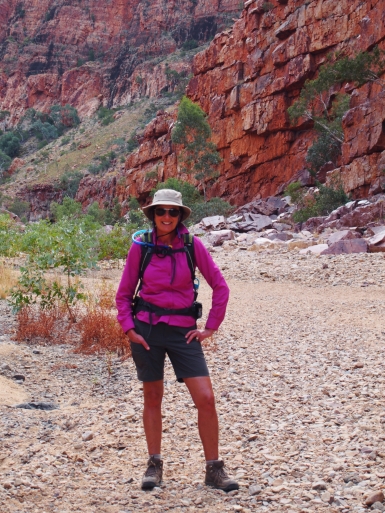
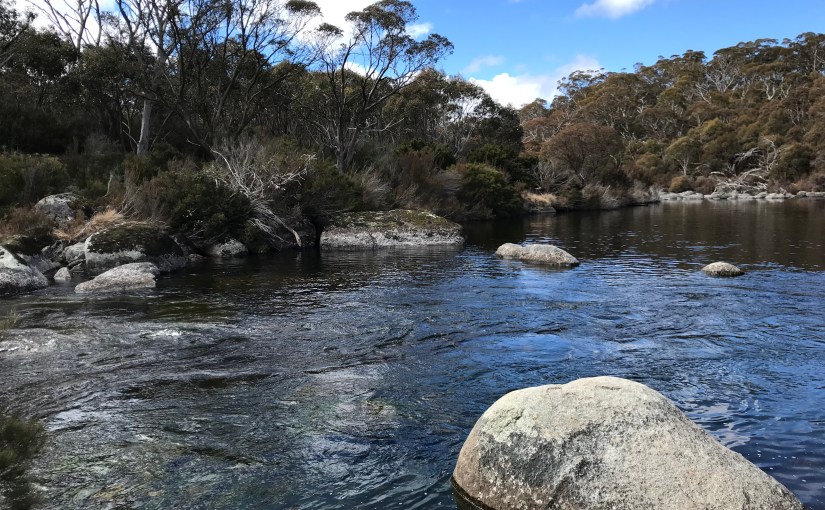
They carried me with empathy and support across many Australian landscapes: beaches and bush in the Bay of Fires, craggy rocks and seal colonies on Kangaroo Island, tracks across Orpheus Island, snow and mud tracks along the Thredbo River, farmland in Goulburn, cliffs and bush trails from Shellharbour to Eden on the NSW South Coast, and most memorably, up and down rocky ridges, through desert grasses and along dry, sandy  river beds on the Larapinta Trail in Central Australia.

Day 13 Glaciar Perito Moreno (42)

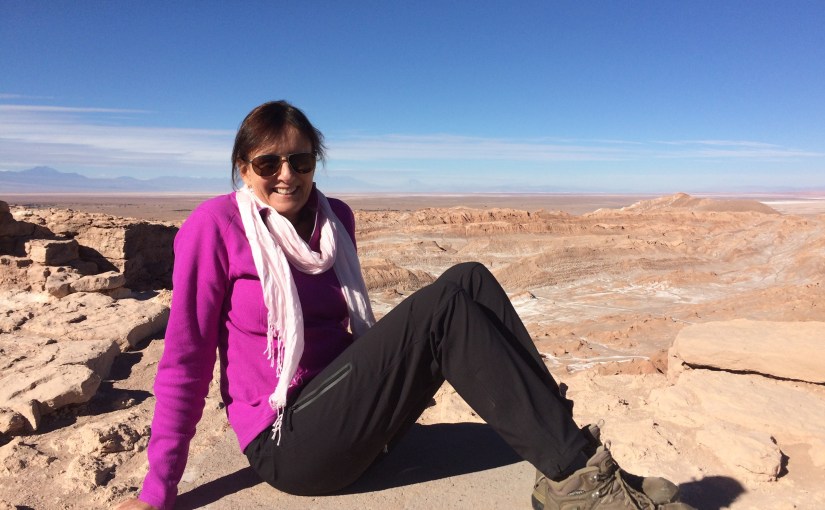
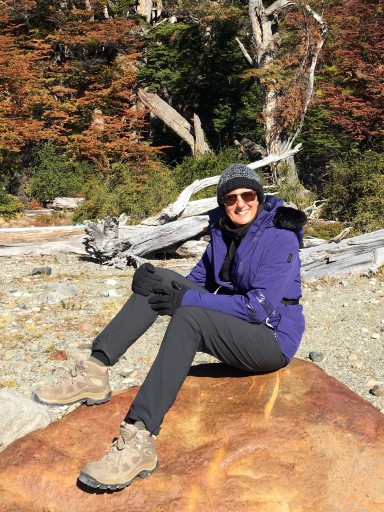
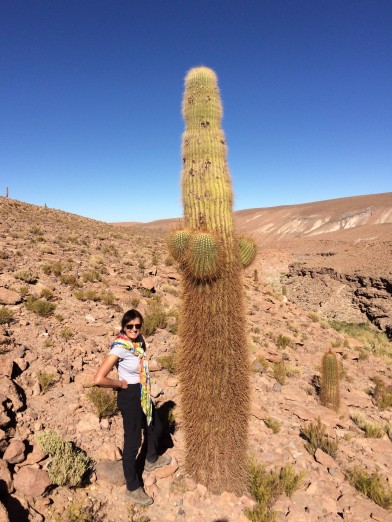
Overseas, they trekked over frozen ground in Patagonia, keeping my feet warm on windswept farms and glacial waterways. They helped me breathe at high altitude by keeping me stable and comfortable in the dry, arid Atacama Desert in Chile.

Day 37 Atacama desert (27)

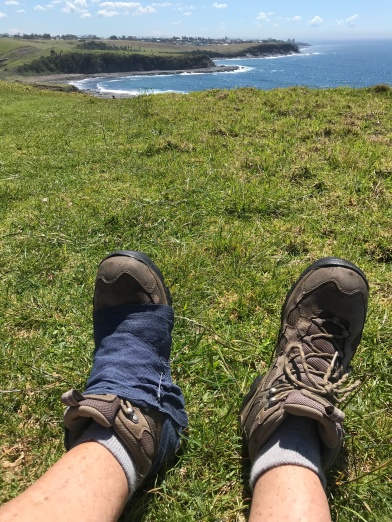
And then on a simple walk through the hills and along the cliff, halfway between Kiama and Gerringong, one boot started flapping like a thong beneath my heel. We’d covered some uneven, muddy and grassy ground, leapt over a rivulet, then there it was. Flap, flap. I looked to see what was stuck to my heel, but alas, it was an unstuck sole. A bandage from the First Aid Kit could only slow its leaking lifeblood, and by Werri Beach, my soul had become unstuck!

Kiama Coast Walk Oct18 (34)

I was ceremoniously carried across the last rivulet so as to keep the boot dry. But we had reached the end of the journey. We had travelled so far. The boots had been in shoe-hospital once already. It was time to let them go. I undid the bandage and the sturdy laces, peeled them off my feet and kissed them both goodbye. Then I unceremoniously dropped them in the bin! Despite this callousness, I will always remember them with love and gratitude. RIP boots.

The Power of Now

I need to learn to meditate! My mind races around like static. One thought bounces into another and pushes it out of the way. Is that why I’m getting forgetful? Often, there’s a load of rubbish or dirty washing going around – on the repeat cycle.

I believe this is a common problem; it’s just about universal. But some people achieve the stillness and peace that comes with successful meditating. It sounds appealing!

According to the book The Power of Now by Eckhardt Tolle, you start by learning to be more present, by paying attention to this moment and that’s all. Not the past. Not the future. But Now. He advises that you can start with paying attention to your breath or the nature around you, not broadly, but very specifically, like one flower. He talks about noticing and feeling the space between things and the silence between the noises.

As I’ve revealed in this blog, I’m a nature lover. I like to walk or kayak on my own, admiring the bush and waterways. I also like to walk at night and look at the stars. The following passage from the book resonated with me:

“Presence is needed to become aware of the beauty, the majesty, the sacredness of nature. Have you ever gazed up into the infinity of space on a clear night, awestruck by the absolute stillness and inconceivable vastness of it? Have you listened, truly listened, to the sound of a mountain stream in the forest? Or to the song of a blackbird at dusk on a quiet summer evening? To become aware of such things, the mind needs to be still…

Beyond the beauty of the external forms, there is more here: something that cannot be named, something ineffable, some deep, inner, holy essence. Whenever and wherever there is beauty, this inner essence shines through somehow. It only reveals itself to you when you are present. Could it be that this nameless essence and your presence are one and the same?”

In other words, put down your personal baggage of problems, of past and future, put aside your judgement and running commentary, and just feel the Now. SO EASILY SAID, SO DIFFICULT TO ACHIEVE! Except for Zen masters!

As a writer, this skill would be very useful to me. I’d notice more. And I think I’d be more productive if I made space in my mind by removing the clutter. Also, according to Mr Tolle, “Only if you are able to be conscious without thought can you use your mind creatively, and the easiest way to enter that state is through your body.”

If you want to understand that, you’ll have to read the book. I’m still working on it!


I’d highly recommend the App Insight Timer for guided meditations and meditative, relaxing music pieces. My favourites include chimes and nature sounds.

For further study – http://www.EckhartTolle.com

Memo to a Younger Self

Toastmasters has been a fun activity for me for the past few years. I tried it out because I’d heard great things about it from friends and I thought it might help my writing – you have to write your own speeches. Speeches are essentially stories about how you feel (an opinion like wildlife conservation), an experience you’ve had (like travelling solo), or something you know (like floristry). Quite often you end up researching something you’re curious about and becoming even more interested.
There are lots of other opportunities too. This week I’m presenting the Salute to the Theme. For two minutes I’ll talk about the theme, What advice would you give your younger self? There are plenty of ways to tackle this and I could talk about studying more, listening to your father or backpacking through Europe. Maybe don’t get a perm. But I’m going to talk about doing things that build self-confidence and self-reliance and being part of a group or team.
Learning new skills gives you a sense of achievement which makes you feel good about yourself. Mixing those skills with other people makes you feel integrated, useful and joyful. Toastmasters includes all these things.
The group encourages you in every task, whether it be a speech or preparing morning tea. Everyone has a role on the day. There’s plenty of praise and evaluations involve the sandwich technique: point of praise, point for improvement, point of praise. So, you get better all the time.
I’ve read that one of the key indicators of longevity is sociability. People who talk to their neighbours, volunteer in community activity and join clubs, live longer.
My advice to my younger self would be Join in! Have a go! Learn something, don’t be afraid to make mistakes or worry what people will think. If you’re mixing with like-minded people, they’ll want you to succeed as well. Not being reliant on others, emotionally or physically, but being happy to give, share and accept help, as in a team, means you’ll be a stronger happier person; one who’s achieving what they want in life and who others are attracted to.
When it comes down to one line, I’d say join Girl Guides.

Conversation and Music

Once a month, a bunch of wise old birds, girlfriends of mine, gather to talk philosophy! Sort of! There’s a lot of eating of cake, as well. And the philosophy is on a minor level – our own! We talk about things that interest 50+ women: issues that need a bit of thought over the month before the next meeting.

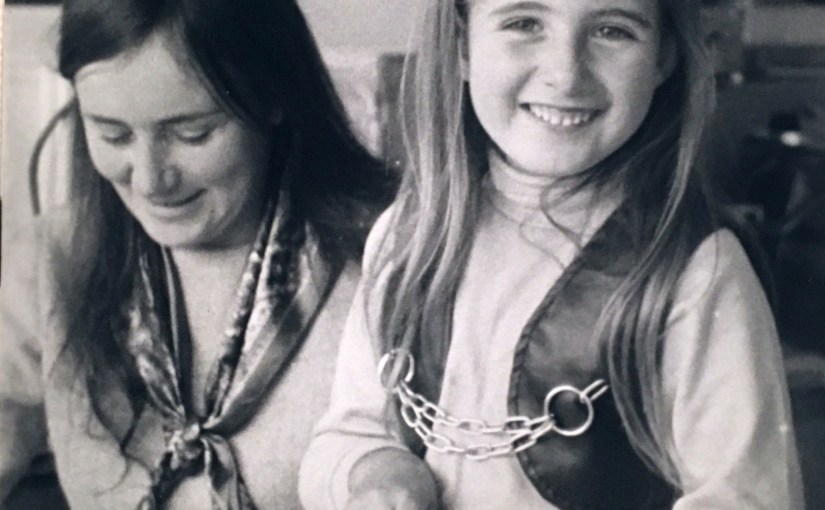
It’s intriguing to find out about our earlier lives, what we believe affected our values, paths and decisions. Once, we brought in a photo of our young-self and asked, What was your dream and how did that go? Another time, What did your parents try to teach you that you ignored? There’s often a lot of laughter.

We might talk about something more current like, How does Procrastination affect your life? We’ve also handled big issues as a group. One month, we discussed and filled in an Advanced Care Directive, helping each other think through our answers.

I’d highly recommend this kind of gathering to anybody with a group of friends. To me, it’s like a more personal kind of book club.

Sometimes we just have fun with it.

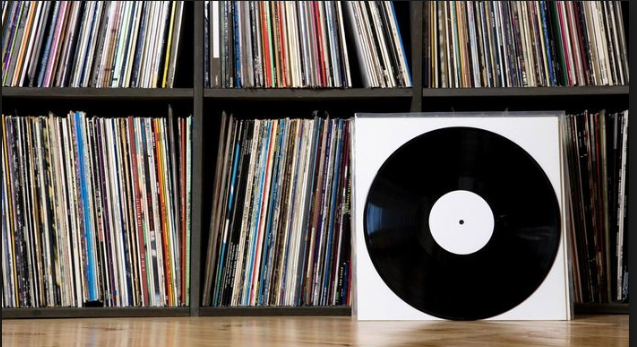
This month’s topic was, What music did you listen to and love in your youth that makes you feel young again now? It was the most animated meeting we’ve had. Everyone had a list of music and it gathered volume as we took turns around the room. In the end, we were throwing names into the space and they were bouncing off the walls. We had playlists and vinyl records to show. Ladies were telling stories of father’s taking them to rock concerts, dancing with first loves, crying over special opera moments and driving through Europe with three cassettes.

Commonalities had us breaking into song with music from the sixties to eighties winning in our hearts. However, it was the seventies that reigned supreme. Was it our age or was it the music?

I’ll share my list and then throw in some of the others. See what you think.

Mine: Carole King, Janis Ian, Fleetwood Mac, Bee Gees, The Jacksons, Michael Jackson, Leo Sayer, Bread, America, Melanie Safka, Roger Daltrey, Neil Young, Meatloaf

Others: Dire Straits, Split Enz, Maryanne Faithful, The Supremes, The Beatles

And so many more.

What was your most loved music from your youth?

Life sucks…..I don’t think so!

My writing journey has involved many sweet indulgences: writing courses on Sydney Harbour, workshops in Tasmania and retreats in Ubud. I love meeting other writerley people, talking writing and doing the work set. It’s challenging, rewarding and fun.

My current experience is an online course run by the Writers Studio at Bronte. Called Unlocking Creativity, it’s designed to help loosen me up, shove off the perfectionist-nag on my shoulder, get the flow of thoughts going, and get me writing every day. There’s daily homework and feedback to give and receive. It’s hard work.

One of last week’s writing prompts was Life sucks! I had successfully written on Standing in the rain, Coughing fit and Love hurts, but when it came to putting pen to paper on Life Sucks, I was stumped. That doesn’t say much for my imagination, does it? I thought about various hardships like the farmers struggling with drought or living in war-torn Syria, but they didn’t fit with the flippancy of the term. So I struggled with various catastrophes like losing your pack while hiking in torrential rain. That was the best I could come up with. Wow, what did that mean?

Fiction may be made-up but it comes from truths, and obviously my truth isn’t Life sucks, it’s life doesn’t suck!

I’m a very lucky girl. I was born in Australia, so I have an advantage. It’s pretty hard to say life sucks when you live in a country with this climate, beauty and level of safety. The culture is generally to look after your mates and be kind to animals. We love the great outdoors and barbeques. Every day, I feel blessed to call Australia home.

I have health, the love of friends and family, shelter and sustenance. These are the foundations for a happy life.

Of course, there’ll be shitty days, months, or even years. Things will go wrong. Life is chaos and we can only try to control it. Have you noticed that when you have bad luck, it happens in threes? I’m not sure about that but I can say, once something goes wrong, there seems to be a clump. Maybe that’s purely attitude. If you get the shits, you often notice the negative.

I have bad things happen to me like everyone else. My car breaks down, I’m going through divorce and my dogs got old. But that’s not life – that’s stuff! If you have the necessary foundations, the key to never having to say life sucks is attitude.

We alone are responsible for our responses.

‘Everything can be taken away from a man but one thing: the last of the human freedoms – to choose one’s attitude in any given set of circumstances, to choose one’s way.’                               Viktor Frankl Man’s Search for Meaning.

Next time you spill coffee down your white shirt, miss a plane connection, have a washed-out holiday or get a pimple in the middle of your forehead, don’t think life sucks, think that sucks. But if you have tales to tell that can prove me wrong, please do, because my imagination sucks and I could use them to do better writing.

‘Things always seem to turn out best for those who seem to make the most of how things turn out.’ Rod Junkins The Art of Creative Thinking